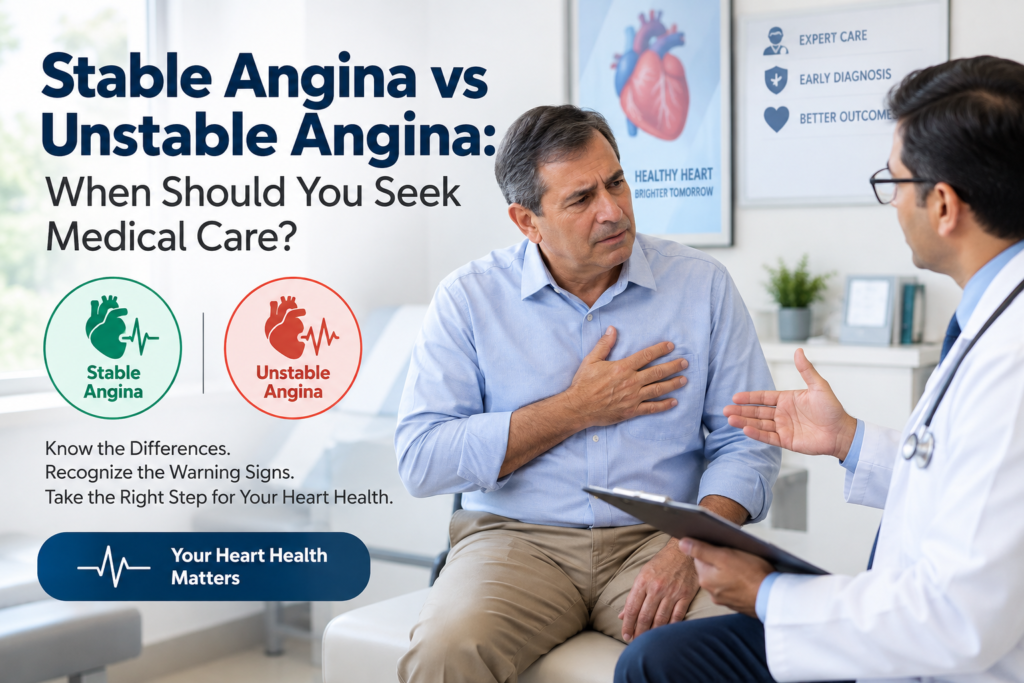
Are you searching for information about Stable Angina vs Unstable Angina because you experience chest pressure, tightness, discomfort, or pain during certain activities? Angina occurs when the heart muscle does not receive enough oxygen-rich blood, and recognizing how different types of angina behave can help you understand when medical evaluation is needed.
While stable angina often follows a predictable pattern, unstable angina can occur unexpectedly or become more severe. Understanding the differences between these conditions, their symptoms, potential causes, and warning signs can help you know when to contact a cardiologist in Cypress, TX or seek emergency medical care.
Quick Answer
Stable angina usually occurs with physical activity or emotional stress and tends to follow a predictable pattern, often improving with rest. Unstable angina is more unpredictable, may occur at rest, become more frequent or severe, and requires urgent medical evaluation because it can indicate a serious reduction in blood flow to the heart.
Key Takeaways
- Stable angina generally follows a predictable pattern.
- Unstable angina can occur unexpectedly, including while resting.
- Both conditions can cause chest pressure, tightness, or discomfort.
- Unstable symptoms require urgent medical evaluation.
- Angina may be associated with coronary artery disease.
- A Heart Specialist can evaluate recurring chest symptoms and cardiovascular risk factors.
- Sudden or severe chest pain with concerning symptoms requires emergency medical attention.
What Are Stable and Unstable Angina?
Stable angina is predictable chest discomfort that usually occurs when the heart needs more oxygen during physical activity or emotional stress. Symptoms may appear while walking quickly, climbing stairs, or exercising and often improve with rest.
Unstable angina is less predictable and may occur with less activity or even while resting. Symptoms can be new, more frequent, longer-lasting, or more severe than previous episodes and require prompt medical evaluation.
Stable Angina vs Unstable Angina: What Is the Difference?
Understanding Stable Angina vs Unstable Angina can help you recognize changes in your chest symptoms.
| Feature | Stable Angina | Unstable Angina |
| Pattern | Usually predictable | Often unpredictable |
| Common trigger | Physical activity or stress | May occur with little activity or at rest |
| Symptoms | Often similar from episode to episode | May become new, worse, or more frequent |
| Relief | May improve with rest | May not improve as expected |
| Medical concern | Requires evaluation and management | Requires urgent medical evaluation |
The pattern of symptoms alone cannot confirm which type of angina you have. A professional cardiovascular evaluation is important when symptoms are new, changing, or unexplained.

What Are the Symptoms of Stable and Unstable Angina?
Understanding the symptoms of stable and unstable angina can help you recognize when chest discomfort needs medical attention.
| Major Symptom | Stable Angina | Unstable Angina |
| Chest pressure or tightness | Usually occurs with activity | Can occur with little activity or at rest |
| Pattern | Predictable and consistent | New, worsening, or unpredictable |
| Relief with rest | Often improves with rest | May not improve with rest |
| Duration | Usually follows a similar pattern | May last longer than usual |
| Shortness of breath | May occur | May occur |
| Sweating, nausea, or dizziness | Less common | May occur with chest discomfort |
If you experience unstable angina symptoms, especially new or worsening chest pain, seek prompt medical evaluation from a cardiologist in Cypress, TX.
When Should You Seek Medical Care for Angina?
You should seek medical care for recurring or unexplained angina symptoms, particularly when they change from your usual pattern.
Contact a healthcare professional if you experience:
- New chest discomfort
- Increasingly frequent episodes
- Chest pain with less activity than before
- Symptoms that last longer than usual
- Chest discomfort accompanied by shortness of breath
- A history of heart disease or cardiovascular risk factors
A change in the pattern of chest symptoms should not be ignored.
How Does a Cardiologist Diagnose Angina?
A cardiologist may use your symptoms, medical history, physical evaluation, and diagnostic testing to assess possible angina.
Step 1: Review Your Symptoms
Your cardiologist may ask when the chest discomfort occurs, how long it lasts, what triggers it, and whether rest changes the symptoms.
Step 2: Evaluate Cardiovascular Risk Factors
Blood pressure, cholesterol, diabetes, smoking, family history, and other risk factors may be reviewed.
Step 3: Perform Appropriate Cardiac Tests
Depending on your symptoms, a cardiologist may recommend tests such as:
- ECG/EKG
- Echocardiogram
- Cardiac stress testing
- Heart rhythm monitoring
- Other cardiac imaging when appropriate
Step 4: Determine the Appropriate Care
The results of your cardiac evaluation help your healthcare provider determine whether further monitoring, treatment, or specialist care is needed.
What Tests May Be Used to Evaluate Angina?
A cardiac evaluation may involve different tests depending on your symptoms and individual health needs.
| Test | What It May Evaluate |
| ECG/EKG | Electrical activity and heart rhythm |
| Echocardiogram | Heart structure and function |
| Stress Test | Heart response during increased activity |
| Blood Tests | Certain markers associated with heart injury |
| Cardiac Imaging | Heart and blood vessel structure |
Not every patient needs every test. A cardiologist determines the appropriate diagnostic approach based on the clinical situation.
Can Stable Angina Become Unstable?
Yes. A change in the usual pattern of stable angina can be an important warning sign.
If stable angina symptoms become more frequent, last longer, occur with less physical activity, or start happening at rest, they may indicate unstable angina. These changes require prompt medical evaluation because they can signal a more serious cardiovascular problem.
How Is Angina Managed?
Angina management depends on its underlying cause, severity, cardiovascular risk factors, and overall health.
A healthcare professional may recommend:
- Lifestyle changes
- Managing blood pressure
- Managing cholesterol
- Controlling diabetes
- Smoking cessation
- Appropriate medications
- Cardiac monitoring
- Additional cardiovascular procedures when necessary
A Heart Specialist can help determine an appropriate management approach based on your individual evaluation.

Why Early Evaluation of Angina Matters
Recognizing changes in angina symptoms and seeking appropriate medical care can help identify potential cardiovascular concerns.
Early evaluation may help:
- Identify possible coronary artery disease
- Assess cardiovascular risk factors
- Determine whether cardiac testing is needed
- Monitor changes in symptoms
- Guide appropriate treatment
- Support long-term heart health
The goal is to understand the cause of chest symptoms and determine the appropriate level of care.
About Nexus Specialty Clinic
At Nexus Specialty Clinic, patients receive specialized cardiovascular care focused on evaluating heart-related symptoms and individual cardiovascular risk factors.
For patients experiencing recurring or unexplained angina symptoms in Cypress, TX, the clinic provides cardiovascular evaluation and diagnostic support to help determine appropriate next steps based on individual healthcare needs.
Cardiology Care for Angina at Nexus Specialty Clinic
At Nexus Specialty Clinic, we focus on providing comprehensive and patient-centered cardiovascular care for patients experiencing chest discomfort and other heart-related concerns.
Comprehensive Cardiac Evaluation
A detailed evaluation can help assess chest symptoms, medical history, and cardiovascular risk factors.
Chest Pain and Angina Evaluation
A cardiologist in Cypress, TX can evaluate recurring chest discomfort and determine whether further cardiac testing may be appropriate.
Cardiac Diagnostic Testing
Appropriate heart tests can provide additional information about heart rhythm, structure, and cardiovascular function.
Cardiovascular Risk Management
Managing factors such as blood pressure, cholesterol, and other cardiovascular risks can support long-term heart health.
Personalized Care Planning
Recommendations are based on your symptoms, medical history, diagnostic findings, and individual healthcare needs.
With a focus on personalized care and comprehensive cardiovascular evaluation, Nexus Specialty Clinic is committed to helping patients take informed steps toward better long-term heart health.
Why Choose Nexus Specialty Clinic for Heart Care?
At Nexus Specialty Clinic, we focus on providing patient-centered cardiovascular care based on each individual’s symptoms, cardiovascular risk factors, and diagnostic needs.
1. Specialized Cardiology Care
Patients receive focused evaluation for chest pain, angina, heart rhythm concerns, and other cardiovascular conditions.
2. Comprehensive Cardiovascular Evaluation
Your symptoms, medical history, family history, and cardiovascular risk factors are considered during evaluation.
3. Cardiac Diagnostic Support
Appropriate testing can help provide useful information when further cardiovascular assessment is needed.
4. Personalized Care
Each patient’s symptoms and healthcare needs are different, so recommendations are tailored to individual findings.
5. Focus on Long-Term Heart Health
Managing cardiovascular risk factors can help support better long-term heart health and informed care decisions.
With a focus on comprehensive evaluation and individualized cardiovascular care, Nexus Specialty Clinic helps patients understand their heart health and appropriate next steps.
Take the Next Step Toward Better Heart Health
If you have recurring or changing angina symptoms, consult a cardiologist in Cypress, TX for appropriate cardiovascular evaluation and cardiac testing. Sudden or severe chest pain with shortness of breath, sweating, nausea, fainting, or pain spreading to the arm, back, neck, or jaw requires immediate emergency medical attention.
Contact Information
Nexus Specialty Clinic
Address : North Cypress Medical Plaza II, 21212 Northwest Freeway Suite 265 Cypress, TX 77429
Contact : (281) 653-9123
Conclusion
Understanding Stable Angina vs Unstable Angina can help you recognize when changes in chest symptoms may require medical attention. Stable angina generally follows a predictable pattern, while unstable angina may occur unexpectedly, become more frequent or severe, or happen while resting.
If you experience recurring, new, or changing chest discomfort, a professional cardiovascular evaluation can help determine the possible cause and appropriate next steps. For non-emergency concerns, speaking with a qualified Heart Specialist can help you better understand your symptoms and cardiovascular health.
FAQ’s – Stable Angina vs Unstable Angina: When Should You Seek Medical Care?
Q1. What is the main difference between stable and unstable angina?
Ans. Stable angina usually follows a predictable pattern and may occur during activity, while unstable angina is unpredictable and may occur at rest or become more severe.
Q2. Is unstable angina an emergency?
Ans. Yes. Unstable angina requires urgent medical evaluation because it may indicate a serious reduction in blood flow to the heart and an increased risk of heart attack.
Q3. Can stable angina get worse?
Ans. Yes. Changes such as more frequent episodes, longer-lasting symptoms, or discomfort occurring with less activity may indicate a worsening condition and require prompt evaluation.
Q4. What tests can diagnose angina?
Ans. A cardiologist may use an ECG/EKG, echocardiogram, stress testing, blood tests, or other cardiac imaging depending on your symptoms and clinical evaluation.
Q5. When should I see a cardiologist for angina?
Ans. You should consider seeing a cardiologist in Cypress, TX for recurring, unexplained, or changing chest discomfort, particularly if you have cardiovascular risk factors.