Are you searching for COPD vs Asthma because you have ongoing coughing, wheezing, shortness of breath, or chest tightness? These two respiratory conditions can cause similar symptoms, but they are different disorders and may require different approaches to diagnosis and treatment.
Understanding the difference between COPD and asthma can help you recognize symptoms, understand the testing process, and know when to seek professional respiratory care. A healthcare professional may use your symptoms, medical history, risk factors, and breathing tests such as spirometry to distinguish between them.
Quick Answer
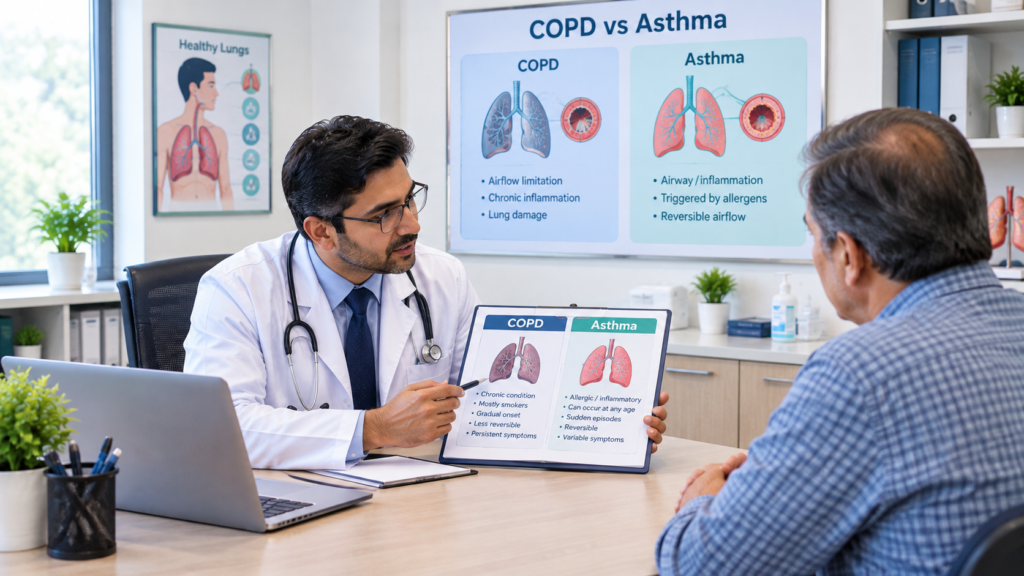
COPD is a chronic lung disease characterized by persistent airflow limitation and commonly includes emphysema and chronic bronchitis. Asthma involves variable respiratory symptoms and variable expiratory airflow limitation, often associated with airway inflammation. Although both can cause coughing, wheezing, and shortness of breath, their patterns, risk factors, and treatment approaches can differ.
Key Takeaways
- COPD vs Asthma involves two different chronic respiratory conditions.
- COPD commonly causes persistent breathing problems, cough, wheezing, and excess mucus.
- Asthma symptoms can vary over time and may include wheezing, breathlessness, chest tightness, and cough.
- Smoking and long-term exposure to harmful particles or gases are major COPD risk factors.
- Asthma symptoms may be triggered by allergens, respiratory infections, exercise, smoke, or other irritants.
- Spirometry and other pulmonary function tests can help healthcare professionals evaluate airflow and support diagnosis.
- COPD treatment and asthma treatment are not interchangeable, so an accurate diagnosis is important.
What Is COPD?
COPD is a chronic lung disease that causes persistent airflow problems, breathing difficulties, coughing, and shortness of breath.
What Is Asthma?
Asthma is a chronic airway condition that causes variable symptoms such as wheezing, coughing, chest tightness, and breathlessness.
What Are the Symptoms of COPD vs Asthma?
Although COPD symptoms and asthma symptoms can overlap, their patterns may provide important clues.
| Factor | COPD | Asthma |
| Nature of condition | Chronic lung disease with persistent airflow limitation | Chronic airway disease with variable symptoms and airflow limitation |
| Typical symptom pattern | More persistent | Often variable |
| Major risk factor/trigger | Tobacco smoke and harmful exposures | Allergens, infections, exercise and irritants |
| Common symptoms | Cough, mucus, wheezing, breathlessness | Wheezing, breathlessness, chest tightness, cough |
| Lung function | Persistent airflow limitation is characteristic | Airflow limitation can vary |
| Diagnostic testing | Spirometry is central to assessment | Spirometry and assessment of variable airflow are important |
| Treatment approach | Often includes bronchodilator-based therapy and non-drug management | Inhaled corticosteroid-containing treatment is an important part of asthma management |
These symptoms alone cannot reliably distinguish COPD vs Asthma. A healthcare professional may need to evaluate the patient’s history and perform objective lung-function testing.

What Causes COPD and Asthma?
The causes and contributing factors are another important part of understanding the difference between COPD and asthma.
Common COPD Risk Factors
COPD is strongly associated with exposure to tobacco smoke. Other possible contributors include secondhand smoke, workplace or environmental exposure to harmful particles or gases, air pollution, and certain individual risk factors.
Common Asthma Triggers
Asthma symptoms can be triggered or worsened by factors such as allergens, respiratory infections, smoke, cold air, physical activity, and workplace irritants. Triggers vary from person to person.
Because the causes and triggers can overlap, a detailed medical history is important when evaluating COPD vs Asthma.
How Is COPD vs Asthma Diagnosed?
A correct diagnosis is important because COPD treatment and asthma treatment are based on different clinical considerations.
A healthcare professional may ask about:
- When symptoms began
- How often symptoms occur
- Whether symptoms vary over time
- Smoking history
- Exposure to dust, chemicals, smoke, or air pollution
- Allergies and asthma history
- Respiratory infections
- Family history
- Previous breathing tests and treatments
This information helps identify whether the symptoms are more consistent with asthma, COPD, another respiratory condition, or potentially more than one condition.
Spirometry and Pulmonary Function Tests
Spirometry is an important breathing test used to evaluate airflow. It measures how much air a person can breathe in and forcefully breathe out and can help identify airflow limitation.
For suspected asthma, spirometry may be performed before and after a bronchodilator to look for evidence of variable expiratory airflow. If the diagnosis remains uncertain, additional testing may be considered based on the clinical situation.
How Is COPD Treated?
COPD treatment is individualized according to symptoms, airflow limitation, exacerbation history, and other clinical factors.
Treatment may include:
- Bronchodilator medications
- Combination inhaler therapy when appropriate
- Smoking cessation
- Pulmonary rehabilitation
- Physical activity and exercise
- Vaccination and prevention of respiratory infections
- Oxygen therapy for selected patients with low blood oxygen levels
- Management of other health conditions
Stopping smoking is particularly important for people with COPD who smoke because it can reduce continued exposure to a major disease risk factor.
How Is Asthma Treated?
Asthma treatment focuses on controlling symptoms, reducing airway inflammation, preventing exacerbations, and identifying or reducing relevant triggers.
Depending on the patient’s age, symptoms, severity, and clinical assessment, treatment may include:
- Inhaled corticosteroid-containing medications
- Bronchodilator medications
- Combination inhaler therapy
- Trigger management
- Asthma action planning
- Regular monitoring and adjustment of treatment
The 2026 GINA guidance emphasizes inhaled corticosteroid-containing therapy as an important component of asthma management and recommends an anti-inflammatory reliever approach in its preferred treatment track.
Can Someone Have Both COPD and Asthma?
Yes. Asthma and COPD can coexist in the same person, although current GOLD guidance emphasizes that they are different disorders rather than treating “asthma-COPD overlap” as a single disease. Some patients may have features of both conditions.
This is one reason why self-diagnosing COPD vs Asthma based only on symptoms can be difficult. If a person has features suggesting asthma alongside persistent airflow limitation, the clinician may need to consider both conditions when planning treatment.
When Should You See a Pulmonologist?
Consider speaking with a respiratory specialist if you have persistent or recurring:
- Shortness of breath
- Wheezing
- Chronic cough
- Excess mucus or phlegm
- Chest tightness
- Reduced ability to perform normal activities
- Repeated respiratory flare-ups
- Breathing symptoms that are difficult to control
A pulmonologist in Cypress TX can evaluate persistent respiratory symptoms, review your medical history, and determine whether further testing such as spirometry or other pulmonary function tests is appropriate.
Do not assume that recurring breathing problems are simply asthma, allergies, or a normal part of aging. Persistent respiratory symptoms deserve proper evaluation.
What Tests May Help Distinguish COPD vs Asthma?
Depending on your symptoms and medical history, a respiratory evaluation may include:
Spirometry
Spirometry measures airflow and is an important test for evaluating obstructive lung disease. It can help identify persistent airflow limitation associated with COPD and may also provide objective evidence relevant to asthma diagnosis.
Bronchodilator Response Testing
For suspected asthma, lung function may be assessed before and after a bronchodilator to look for variable airflow limitation. Additional testing may be considered if the diagnosis remains uncertain.
Additional Pulmonary Evaluation
Depending on the patient’s symptoms, clinicians may consider additional investigations to identify other respiratory conditions or contributing factors. The exact testing plan depends on the individual clinical situation.

Why Accurate Diagnosis Matters in COPD vs Asthma
Getting the diagnosis right matters because COPD treatment and asthma treatment are not the same.
For example, GINA and GOLD guidance emphasize important differences in medication strategies. In asthma, inhaled corticosteroid-containing therapy is a key component of treatment, while COPD treatment is based on individualized assessment and commonly uses bronchodilator therapy.
When asthma and COPD features coexist, treatment decisions require particular care. This is why persistent respiratory symptoms should be evaluated rather than treated based only on assumptions about the cause.
Meet Nexus Specialty Clinic
At Nexus Specialty Clinic, patients can receive coordinated care for respiratory and related health concerns. The clinic provides specialty services in pulmonology, sleep medicine, cardiology, and diagnostic testing.
For patients experiencing ongoing breathing symptoms, the goal is to understand the underlying problem, perform appropriate evaluation, and develop an individualized care plan.
Why Choose Nexus Specialty Clinic for Respiratory Care?
When managing COPD vs Asthma, choosing the right respiratory care can help support accurate evaluation and appropriate treatment.
1. Comprehensive Specialty Care
Nexus Specialty Clinic brings multiple specialties together, helping patients receive coordinated evaluation when respiratory symptoms may involve more than one health concern.
2. Diagnostic Evaluation
Appropriate diagnostic testing can help healthcare professionals better understand lung function and identify the cause of persistent respiratory symptoms.
3. Patient-Focused Treatment
Respiratory care should be based on the patient’s symptoms, medical history, risk factors, test results, and treatment response rather than a one-size-fits-all approach.
4. Convenient Cypress Location
Patients looking for respiratory care in the Cypress area can access specialty evaluation at Nexus Specialty Clinic.
With comprehensive care and diagnostic support, Nexus Specialty Clinic helps patients address respiratory concerns with personalized care.
Take the Next Step Toward Better Respiratory Health
If you are experiencing persistent COPD symptoms, asthma symptoms, wheezing, chronic cough, or shortness of breath, proper evaluation can help determine the underlying cause.
If you are unsure whether your symptoms are related to COPD vs Asthma, speak with a qualified respiratory specialist rather than relying on self-diagnosis. Contact Nexus Specialty Clinic to discuss your symptoms and whether a pulmonary evaluation may be appropriate.
Contact Information
Nexus Specialty Clinic
Address : North Cypress Medical Plaza II, 21212 Northwest Freeway Suite 265 Cypress, TX 77429
Contact : (281) 653-9123
Conclusion
Understanding COPD vs Asthma is important because both conditions can cause similar respiratory symptoms but may require different approaches to diagnosis and treatment. COPD involves persistent airflow limitation, while asthma typically causes variable respiratory symptoms and airflow changes.
If you experience persistent or worsening COPD or asthma symptoms, such as coughing, wheezing, or shortness of breath, professional respiratory evaluation can help identify the underlying condition and guide appropriate treatment.
FAQ’s – COPD vs Asthma: Key Differences in Symptoms and Treatment
Q1. Is COPD the same as asthma?
Ans. No. COPD and asthma are different respiratory conditions, although they can share symptoms such as coughing, wheezing, and shortness of breath. Some people can have features of both conditions.
Q2. What is the main difference between COPD and asthma?
Ans. A major distinction is the pattern of airflow limitation. COPD is characterized by persistent airflow limitation, while asthma commonly involves variable symptoms and variable expiratory airflow limitation.
Q3. Can asthma turn into COPD?
Ans. Asthma and COPD are separate diseases, but some people with asthma may later develop persistent airflow limitation or also develop COPD. A healthcare professional should evaluate the individual rather than assuming one condition has simply changed into the other.
Q4. Is spirometry used for both COPD and asthma?
Ans. Yes. Spirometry is an important breathing test used in the evaluation of both conditions. The way the results are interpreted depends on the suspected diagnosis and clinical context.
Q5. Can a person have both asthma and COPD?
Ans. Yes. Asthma and COPD can coexist in some individuals. When features of both are present, treatment should be carefully individualized.