
Are you searching for Lung Infection Treatment in Cypress, TX because you have a persistent cough, fever, chest discomfort, mucus, or trouble breathing? Lung infections can range from mild respiratory illnesses to more serious conditions such as pneumonia, depending on the cause and severity.
Understanding lung infection symptoms, causes, diagnosis, and treatment can help you know when medical evaluation is needed. This guide covers common symptoms, risk factors, diagnostic tests, lung infection treatment options, and when to consult a pulmonologist in Cypress, TX.
Quick Answer
Lung infection treatment depends on the cause and severity of the infection. Bacterial infections may require antibiotics, while some viral infections may require antiviral medicines. Fungal infections are treated with antifungal medicines, and severe infections may require oxygen therapy or hospital care.
Key Takeaways
- Lung infections can be caused by bacteria, viruses, fungi, and other organisms.
- Pneumonia is a common type of lung infection.
- Common lung infection symptoms include cough, fever, chills, shortness of breath, and chest pain.
- Diagnosis may include a physical examination, chest X-ray, blood tests, and oxygen-level testing.
- Lung infection treatment depends on the underlying cause.
- Antibiotics do not treat viral lung infections.
- Severe breathing problems or worsening symptoms require prompt medical attention.
What Is a Lung Infection?
A lung infection occurs when microorganisms infect the lungs and cause inflammation. Pneumonia is one of the most common types and can affect one or both lungs.
The infection may be caused by bacteria, viruses, or fungi. The symptoms and treatment approach can vary depending on the specific cause.
What Causes Lung Infections?
The most common lung infection causes include bacteria and viruses, while fungi and other organisms are less common causes.
Bacterial Lung Infections
Bacteria can cause pneumonia and other respiratory infections. Streptococcus pneumoniae is one of the common bacterial causes of pneumonia.
Viral Lung Infections
Viruses such as influenza, RSV, COVID-19, and other respiratory viruses can cause infections that affect the lungs.
Fungal Lung Infections
Fungal infections are less common but can affect the lungs, particularly in people with certain health conditions or weakened immune systems.
What Are the Symptoms of a Lung Infection?
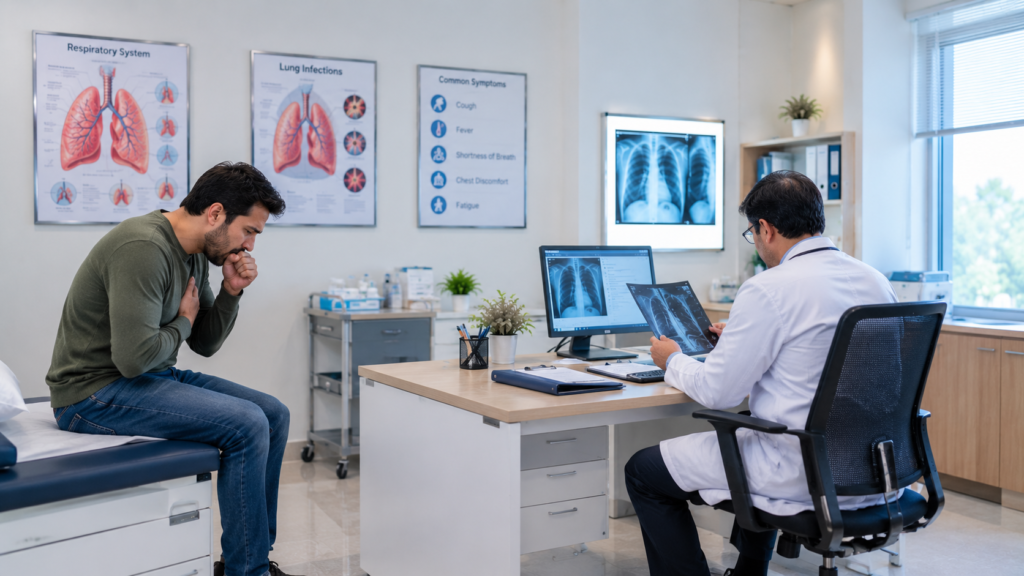
Common lung infection symptoms include cough, fever or chills, shortness of breath, fatigue, and chest pain that may occur with breathing or coughing.
| Major Symptom | What You May Experience |
| Cough | Dry cough or cough with mucus |
| Fever or chills | Increased temperature or feeling unusually cold |
| Shortness of breath | Difficulty breathing or getting enough air |
| Chest pain | Discomfort that may worsen when breathing or coughing |
| Mucus | Increased phlegm may occur |
| Fatigue | Unusual tiredness or weakness |
Symptoms can vary from person to person, especially among older adults or those with underlying health conditions. If symptoms persist or worsen, consult a lung specialist for proper evaluation and treatment.
Who Is at Higher Risk of Lung Infections?
Certain factors can increase the risk of developing pneumonia or experiencing more serious illness.
These include:
- Older age
- Chronic lung disease
- Chronic heart disease
- Diabetes
- A weakened immune system
- Smoking
- Exposure to people with respiratory infections
People with existing conditions such as COPD or asthma may also need closer attention when respiratory symptoms develop.
How Is a Lung Infection Diagnosed?
A lung infection diagnosis begins with a review of symptoms and medical history followed by a physical examination. A healthcare professional may listen to the lungs and assess vital signs and oxygen levels.
Chest X-Ray
A chest X-ray is commonly used when pneumonia is suspected and can help identify inflammation in the lungs.
Blood Tests
Blood tests may help identify signs of infection and, in some cases, help determine the organism responsible.
Pulse Oximetry
Pulse oximetry measures the oxygen level in the blood and can help determine whether an infection is affecting oxygenation.
Sputum Testing
A sputum test may be used when identifying the specific organism causing pneumonia is important, particularly in more serious cases.
CT Scan
A chest CT scan provides more detailed images than an X-ray and may be used when additional information or evaluation of complications is needed.
What Are the Lung Infection Treatment Options?
The appropriate lung infection treatment depends on the cause, severity, and the patient’s overall health.
Antibiotics for Bacterial Infections
Antibiotics may be prescribed for bacterial pneumonia when clinically appropriate. They do not treat viral infections.
Antiviral Medicines
Some viral lung infections may be treated with antiviral medicines, depending on the specific virus and the patient’s condition.
Antifungal Medicines
When a fungal infection is responsible, antifungal treatment may be required.
Supportive Treatment
Milder infections may be managed at home with appropriate medical guidance and supportive care. More serious infections may require oxygen therapy, IV medicines or fluids, or hospital monitoring.
When Should You See a Lung Infection Doctor in Cypress, TX?
You should consider seeing a lung infection doctor in Cypress, TX when symptoms are persistent, worsening, or interfering with your normal activities.
Seek prompt medical evaluation if you experience:
- Increasing shortness of breath
- Persistent or severe chest pain
- High or persistent fever
- Worsening cough
- Coughing up blood
- Confusion or unusual weakness
- Symptoms that improve and then become worse
Severe difficulty breathing or other serious symptoms require immediate emergency medical attention.
Can Lung Infections Be Prevented?
Some steps can reduce the risk of certain lung infections and pneumonia.
Stay Up to Date With Recommended Vaccines
Vaccination can help prevent some infections that can lead to pneumonia. Discuss recommended vaccines with your healthcare professional.
Avoid Smoking
Smoking can increase the risk of respiratory infections and affect lung health.
Practice Good Hygiene
Hand hygiene and avoiding close contact with people who are sick can help reduce exposure to respiratory infections.
Manage Existing Lung Conditions
Proper management of conditions such as COPD and asthma can be an important part of maintaining respiratory health.
Lung Infection vs. Chest Cold: What’s the Difference?
A chest cold, often called acute bronchitis, mainly affects the airways and is usually caused by a virus. Pneumonia is an infection of the lungs that can affect the air sacs and may cause more serious illness.
Because symptoms can overlap, persistent or worsening cough, fever, chest pain, or breathing difficulty should be medically evaluated.
What Mistakes Should You Avoid When Treating a Lung Infection?
One common mistake is assuming that every lung infection requires antibiotics. Antibiotics work against certain bacterial infections but do not treat viral infections.
Avoid:
- Self-starting leftover antibiotics
- Ignoring worsening breathing problems
- Delaying medical evaluation for severe symptoms
- Stopping prescribed medication without medical advice
- Assuming persistent symptoms are only a common cold
Meet Nexus Specialty Clinic
At Nexus Specialty Clinic, patients can access specialty services for respiratory and related health concerns, including Pulmonology, Sleep Medicine, Cardiology, and Diagnostic & Testing.
If you have persistent lung infection symptoms, respiratory evaluation can help determine whether further testing or specialized care may be appropriate.
Lung Infection Treatment Options Are Available at Nexus Specialty Clinic
At Nexus Specialty Clinic, lung infection care begins with understanding your symptoms, medical history, and respiratory health. The clinic provides pulmonology consultations, pulmonary function studies, respiratory infection treatment, and diagnostic support to help evaluate and manage respiratory conditions.
1. Pulmonary Consultation
A pulmonologist in Cypress, TX can evaluate persistent cough, shortness of breath, chest discomfort, wheezing, or suspected lung infections and determine whether further testing is needed.
2. Diagnostic & Lung Function Testing
Nexus offers pulmonary function studies and other diagnostic services that can help assess lung function and support an accurate respiratory evaluation.
3. Respiratory Infection Treatment
The clinic provides respiratory infection treatment as part of its pulmonary care services. Treatment is determined according to the patient’s symptoms, diagnosis, medical history, and clinical findings.
4. Comprehensive Pulmonary Care
Nexus also provides care for conditions such as asthma, COPD, chronic bronchitis, emphysema, bronchiectasis, pulmonary fibrosis, and other respiratory disorders, allowing related lung conditions to be evaluated alongside infection-related symptoms.
If you are experiencing persistent lung infection symptoms, Nexus Specialty Clinic provides pulmonary evaluation and diagnostic support to help determine the appropriate next step in care.

Why Choose Nexus Specialty Clinic for Lung Infection Treatment?
Nexus Specialty Clinic combines pulmonology expertise, diagnostic evaluation, and personalized care to help identify the underlying cause and guide appropriate treatment.
Experienced Pulmonary Specialists
Nexus Specialty Clinic provides specialized pulmonary care led by experienced physicians, including Dr. Sujatha Goli, who has more than 20 years of experience in pulmonary, sleep, and critical care medicine.
Comprehensive Lung Evaluation
A detailed evaluation helps assess symptoms, medical history, and lung health. Depending on the clinical situation, appropriate pulmonary testing and diagnostic assessments can help identify the cause of respiratory symptoms.
Personalized Treatment Planning
Every lung infection can affect patients differently. Nexus focuses on developing care plans based on the patient’s symptoms, diagnosis, overall health, and individual healthcare needs.
Advanced Diagnostic Support
Accurate diagnosis is an important part of lung infection treatment in Cypress, TX. Nexus provides pulmonary diagnostic services and testing to help physicians evaluate respiratory problems and make informed treatment decisions.
Integrated Heart, Lung & Sleep Care
Nexus brings cardiology, pulmonology, sleep medicine, and diagnostic services together in one clinic. This integrated approach can be useful when respiratory symptoms overlap with heart or sleep-related conditions.
Patient-Focused Communication
The team focuses on explaining the diagnosis, testing, treatment options, and recommended next steps clearly so patients can participate in their healthcare decisions.
With experienced specialists, comprehensive evaluation, advanced diagnostics, and personalized care, Nexus Specialty Clinic provides focused support for patients seeking lung infection treatment in Cypress, TX.
Take the Next Step Toward Better Respiratory Health
If you have persistent lung infection symptoms, including cough, fever, chest discomfort, mucus, or shortness of breath, professional evaluation can help identify the underlying cause.
Contact Nexus Specialty Clinic to discuss your symptoms and whether Lung Infection Treatment in Cypress, TX or further respiratory testing may be appropriate.
Contact Information
Nexus Specialty Clinic
Address : North Cypress Medical Plaza II, 21212 Northwest Freeway Suite 265 Cypress, TX 77429
Contact : (281) 653-9123
Conclusion
A lung infection can have different causes and may produce symptoms such as coughing, fever, chest discomfort, mucus, and shortness of breath. Because treatment depends on the underlying cause, proper diagnosis is an important part of effective care.
If respiratory symptoms persist or worsen, seeking Lung Infection Treatment in Cypress, TX can help determine the cause and appropriate treatment approach. A pulmonologist in Cypress, TX can evaluate ongoing respiratory concerns and guide the next step in care.
FAQ‘s – Lung Infection Treatment in Cypress, TX
Q1. What is the treatment for a lung infection?
Ans. Lung infection treatment depends on the cause. Bacterial infections may require antibiotics, while some viral and fungal infections require different treatments.
Q2. What are common lung infection symptoms?
Ans. Common symptoms include cough, fever, chills, shortness of breath, fatigue, and chest pain, particularly when breathing or coughing.
Q3. Do all lung infections require antibiotics?
Ans. No. Antibiotics treat bacterial infections but do not treat viral infections. Treatment should be based on the suspected or confirmed cause.
Q4. Is pneumonia a lung infection?
Ans. Yes. Pneumonia is an infection of one or both lungs and can be caused by bacteria, viruses, fungi, and other organisms.
Q5. How is a lung infection diagnosed?
Ans. Diagnosis may include a physical examination, chest X-ray, blood tests, pulse oximetry, sputum testing, or CT imaging, depending on the patient’s condition