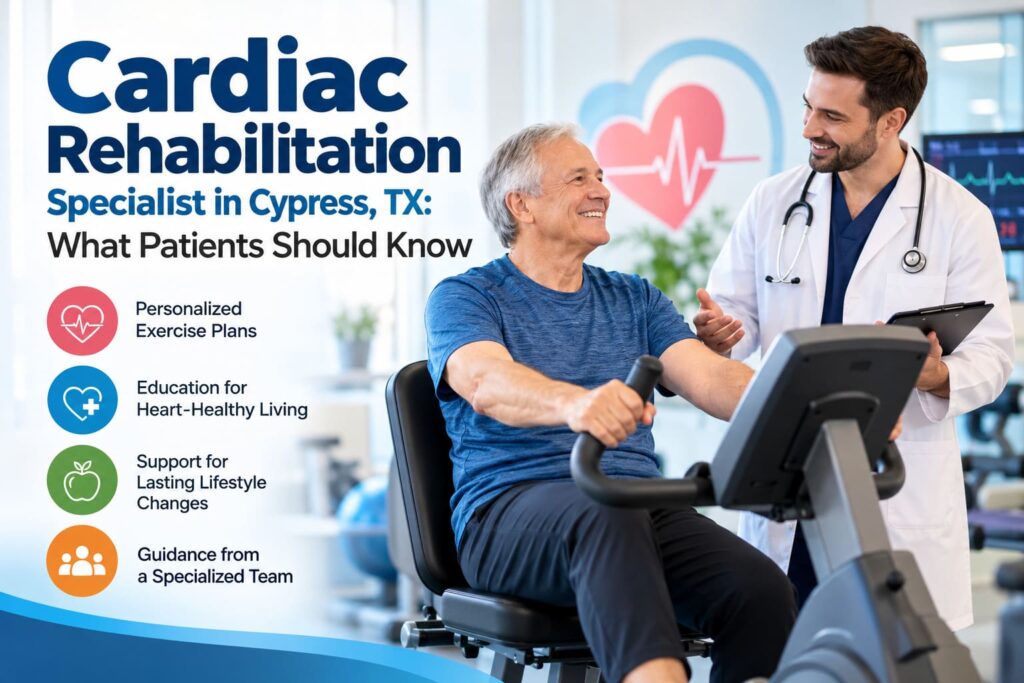
Are you searching for a cardiac rehabilitation specialist in Cypress, TX? Cardiac rehabilitation can be an important part of recovery after a heart attack, heart surgery, angioplasty, stent placement, heart failure, or certain other cardiovascular conditions. It combines supervised exercise, heart-health education, nutrition guidance, risk-factor management, and support to help patients safely improve their cardiovascular health.
At Nexus Specialty Clinic, cardiac rehabilitation in Cypress, TX focuses on individualized recovery through exercise, education, nutrition, and stress management. The clinic’s program is designed around the patient’s medical history, abilities, and long-term heart-health needs.
Quick Answer: What Does a Cardiac Rehabilitation Specialist Do?
A cardiac rehabilitation specialist helps patients safely return to physical activity and develop healthier habits after a cardiac event or procedure. A cardiac rehab program may include supervised exercise, cardiovascular risk-factor management, nutrition counseling, stress management, patient education, and ongoing monitoring under medical supervision.
Key Takeaways
- Cardiac rehabilitation is a medically supervised approach to cardiovascular recovery.
- It may be recommended after a heart attack, angioplasty, stent, bypass surgery, valve procedure, or heart failure.
- Cardiac rehab combines exercise with nutrition, education, and cardiovascular risk-factor management.
- A cardiologist and other healthcare professionals may work together as part of the rehabilitation team.
- Exercise is customized according to your medical condition, fitness level, and physical limitations.
- Stress management and healthy lifestyle changes are important parts of long-term cardiac care.
- A cardiac rehabilitation specialist can help you understand how to exercise safely after a heart-related event.
What Is Cardiac Rehabilitation?
Cardiac rehabilitation, also called cardiac rehab, is a medically supervised program designed to help people recover from cardiovascular disease, heart surgery, or certain cardiac procedures.
Rather than focusing only on exercise, comprehensive cardiac rehabilitation addresses several aspects of cardiovascular health, including physical activity, nutrition, weight management, risk factors, psychological well-being, and long-term lifestyle changes.
The goal is to help patients gradually improve their physical capacity, understand their heart condition, manage cardiovascular risk factors, and develop sustainable heart-healthy habits.
Who May Need Cardiac Rehabilitation?
A cardiac rehabilitation specialist may work with patients recovering from different cardiovascular conditions and procedures.
Cardiac rehab may be recommended for patients who have experienced:
- Heart attack or myocardial infarction
- Coronary artery disease
- Stable angina
- Heart failure
- Angioplasty or coronary stenting
- Coronary artery bypass graft surgery
- Heart valve repair or replacement
- Heart or heart-lung transplantation
- Certain peripheral artery conditions
Eligibility depends on the patient’s diagnosis, procedure, overall health, and medical assessment.
Can You Start Cardiac Rehab After a Heart Attack?
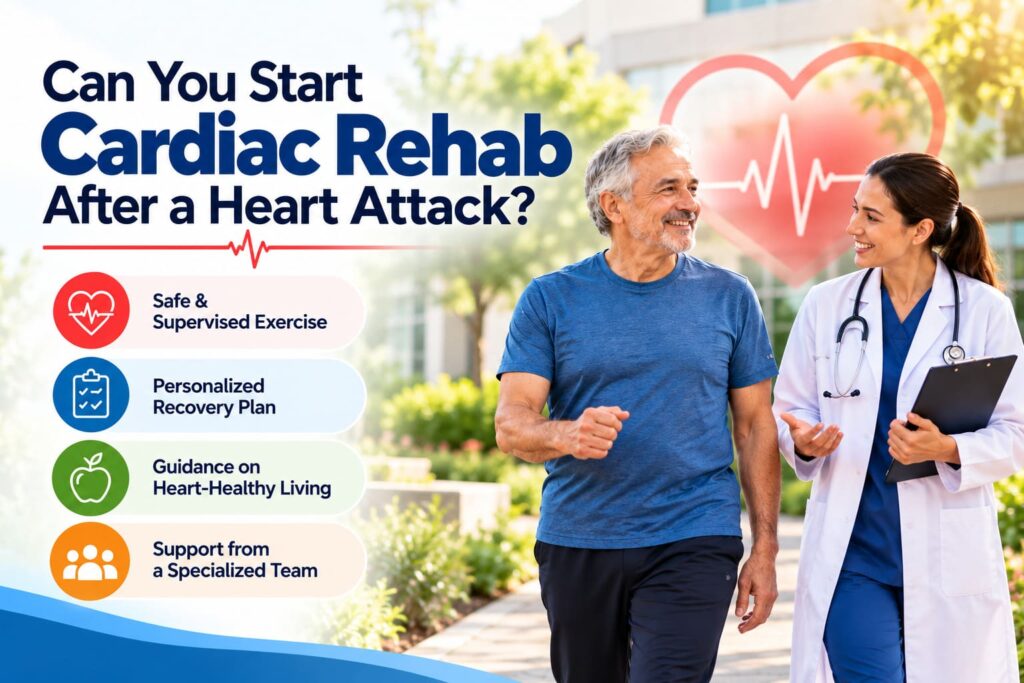
Yes. Cardiac rehabilitation after a heart attack can form an important part of recovery and secondary prevention.
Your cardiologist and rehabilitation team can evaluate your condition and determine when it is appropriate to begin physical activity and structured rehabilitation.
What Does a Cardiac Rehabilitation Specialist Do?
A cardiac rehabilitation specialist works with the broader healthcare team to help patients safely improve their cardiovascular health.
Depending on the program, cardiac rehabilitation may involve:
Exercise Assessment and Training
Your physical abilities, medical limitations, and cardiovascular risk are assessed before an individualized exercise plan is developed. Exercise may include aerobic activity and strength training appropriate to your condition.
Cardiovascular Risk-Factor Management
Cardiac rehab can address factors associated with cardiovascular disease, such as blood pressure, cholesterol, weight, diabetes, physical inactivity, and tobacco use.
Nutrition Counseling
Heart-healthy nutrition is another important component of cardiac rehabilitation. A nutrition professional may help you understand healthier food choices and develop practical eating habits.
Stress Management
Recovering from a heart attack or cardiac procedure can be emotionally challenging. Cardiac rehabilitation can include psychosocial assessment and strategies to manage stress and support emotional well-being.
Patient Education
Understanding your cardiovascular condition, medications, exercise, nutrition, and risk factors can help you take a more active role in your long-term heart health.
What Happens During Cardiac Rehabilitation?
A cardiac rehabilitation program generally begins with an assessment before exercise and other activities are introduced.
Your healthcare team may review:
- Medical history
- Cardiovascular condition
- Previous heart procedures
- Exercise capacity
- Physical limitations
- Cardiovascular risk factors
- Current medications
- Lifestyle habits
The information helps the team develop an individualized cardiac rehabilitation plan that fits your medical needs.
Supervised Exercise
Exercise is an important part of cardiac rehab, but it is not simply a standard gym workout.
Your activity level is adjusted according to your cardiovascular condition, physical ability, and recovery. A medically supervised program can help you learn how to exercise safely and recognize symptoms that require attention.
Monitoring During Rehabilitation
Depending on the program and your medical needs, your healthcare team may monitor your response to physical activity and make adjustments to your exercise plan.
If you develop new or worsening symptoms, you should follow the instructions provided by your healthcare team and seek appropriate medical care.
What Are the Benefits of Cardiac Rehabilitation?
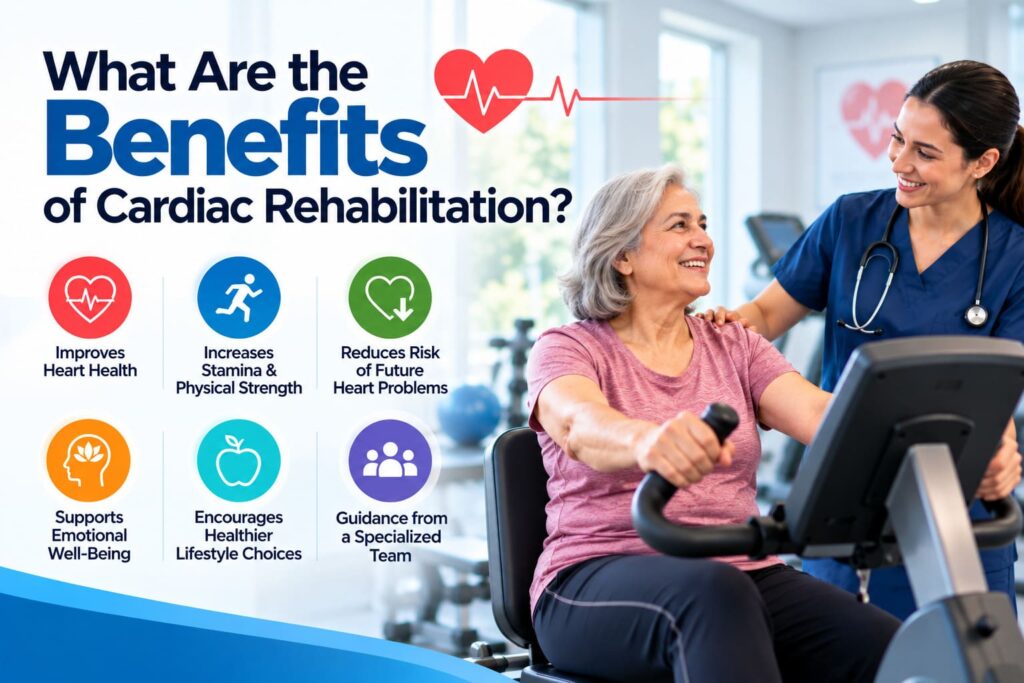
Cardiac rehabilitation in Cypress, TX can support both physical recovery and long-term cardiovascular health.
Potential benefits include:
- Improved physical fitness
- Better exercise capacity
- Improved strength
- Healthier lifestyle habits
- Better management of cardiovascular risk factors
- Support with weight management
- Smoking cessation support
- Stress management
- Improved quality of life
- Reduced risk of future cardiovascular problems
The American Heart Association states that cardiac rehabilitation can improve quality of life and reduce mortality among people with cardiovascular disease.
How Does Cardiac Rehab Help With Heart Disease?
Cardiac rehabilitation is particularly relevant to heart disease management because it combines physical activity with education and risk-factor modification.
For example, a patient recovering from coronary artery disease may need more than exercise alone. The rehabilitation program may also address nutrition, blood pressure, cholesterol, smoking, weight, medications, and stress.
This comprehensive approach helps patients understand the factors that influence their cardiovascular health and develop sustainable habits.
What Is the Role of a Cardiologist in Cardiac Rehabilitation?
A cardiologist plays an important role in evaluating cardiovascular conditions and determining appropriate treatment and rehabilitation needs.
Your cardiologist may review your:
- Heart condition
- Medical history
- Cardiac procedures
- Symptoms
- Exercise capacity
- Cardiovascular risk factors
- Diagnostic test results
A cardiac rehabilitation program is typically part of coordinated cardiovascular care, with different healthcare professionals contributing according to the patient’s needs.
What Professionals Are Part of a Cardiac Rehab Team?
Cardiac rehabilitation is generally multidisciplinary rather than dependent on one specialist.
Depending on the program, your team may include:
- Cardiologist
- Nurses
- Exercise physiologists
- Physical therapists
- Dietitians or nutrition specialists
- Behavioral health professionals
- Other healthcare professionals
These professionals work together to address exercise, nutrition, cardiovascular risk factors, medication education, and emotional well-being.
How Long Does Cardiac Rehabilitation Take?
The length of cardiac rehabilitation varies according to the patient’s condition, recovery, goals, and program.
Mayo Clinic notes that many programs involve sessions several times per week over a period of weeks, although the exact schedule varies. Some programs may also offer virtual or home-based options for appropriate patients.
Your cardiologist and cardiac rehabilitation team can determine the appropriate duration and progression for your individual recovery.
Is Cardiac Rehabilitation Only About Exercise?
No. This is an important point for patients considering cardiac rehabilitation.
A comprehensive program can include:
| Component | Purpose |
|---|---|
| Exercise training | Improve physical capacity and cardiovascular fitness |
| Nutrition counseling | Support heart-healthy eating habits |
| Risk-factor management | Address blood pressure, cholesterol, weight, diabetes, and smoking |
| Stress management | Support emotional and psychological well-being |
| Patient education | Help patients understand their condition and treatment |
| Lifestyle counseling | Build sustainable long-term habits |
The American Heart Association’s 2024 scientific statement identifies patient assessment, nutrition, weight management, cardiovascular risk-factor management, psychosocial management, aerobic exercise, strength training, and physical activity counseling among core components of cardiac rehabilitation.
When Should You Ask About Cardiac Rehabilitation?
If you have recently experienced a heart attack, undergone a cardiac procedure, or been diagnosed with a cardiovascular condition, ask your cardiologist whether cardiac rehabilitation may be appropriate.
You should also discuss rehabilitation if you are uncertain about:
- When to start exercising
- How much physical activity is appropriate
- How to return to normal activities
- How to manage cardiovascular risk factors
- How to improve your heart-healthy lifestyle
- Whether you need supervised exercise
The appropriate timing depends on your medical condition and recovery.
Cardiac Rehabilitation in Cypress, TX at Nexus Specialty Clinic
Nexus Specialty Clinic provides cardiac rehabilitation in Cypress, TX as part of its cardiology services. The clinic describes its rehabilitation approach as combining customized exercise routines, nutritional counseling, and stress management while tailoring care to each patient’s abilities and medical history.
Nexus also lists cardiac consultation, cardiac imaging, cardiac electrophysiology, preventive cardiology, EKG, echocardiography, Holter/event monitoring, vascular studies, and cardiac rehabilitation among its cardiology services.
This allows patients to access cardiac evaluation and related cardiovascular services through the same specialty clinic when clinically appropriate.
Why Choose Nexus Specialty Clinic for Cardiac Rehabilitation?
Choosing a cardiac rehabilitation specialist in Cypress, TX involves looking at more than exercise services. Effective cardiac recovery requires appropriate medical evaluation, individualized planning, monitoring, and long-term cardiovascular care.
Individualized Cardiac Rehabilitation
Nexus describes its cardiac rehabilitation approach as tailored to each patient’s abilities and medical history rather than using the same plan for everyone.
Multidisciplinary Approach
The clinic’s cardiac rehabilitation program incorporates collaboration between medical professionals, exercise physiologists, and nutrition experts to address different aspects of recovery.
Comprehensive Cardiology Services
Nexus provides cardiac rehabilitation alongside cardiac consultation, cardiac imaging, EKG, echocardiography, rhythm monitoring, preventive cardiology, and other cardiovascular services.
Focus on Long-Term Heart Health
Cardiac rehabilitation at Nexus emphasizes exercise, nutrition, stress management, and healthy lifestyle changes that can support ongoing cardiovascular health.
Convenient Cypress Location
If you are recovering from a heart condition or cardiac procedure, a cardiac rehabilitation specialist in Cypress, TX can help you understand the appropriate next steps for safe exercise, cardiovascular recovery, and long-term heart health.
Contact Information
Nexus Specialty Clinic
Address : North Cypress Medical Plaza II, 21212 Northwest Freeway Suite 265 Cypress, TX 77429
Contact : (281) 653-9123
Frequently Asked Questions About Cardiac Rehabilitation
Q1. What is cardiac rehabilitation?
Cardiac rehabilitation is a medically supervised program designed to help people recover from cardiovascular disease, heart attacks, heart surgery, and certain cardiac procedures through exercise, education, risk-factor management, and lifestyle support.
Q2. Who can benefit from cardiac rehabilitation?
Patients recovering from a heart attack, coronary artery disease, heart failure, angioplasty, stent placement, bypass surgery, valve procedures, or certain other cardiovascular conditions may be eligible for cardiac rehabilitation.
Q3. What exercises are included in cardiac rehab?
Exercise plans are individualized. Depending on your condition and fitness level, cardiac rehabilitation may include aerobic exercise, strength training, and physical activity counseling.
Q4. Does cardiac rehabilitation include nutrition counseling?
Yes. Nutrition counseling is a core component of comprehensive cardiac rehabilitation and can help patients develop healthier eating habits and manage cardiovascular risk factors.
Q5. Do I need a cardiologist for cardiac rehabilitation?
A cardiologist and other healthcare professionals may be involved in determining whether cardiac rehabilitation is appropriate and developing a safe recovery plan. Eligibility and referral requirements can vary by program and insurance.
Q6. How long does cardiac rehabilitation last?
The duration varies according to the patient’s condition and rehabilitation goals. Many programs involve regular supervised sessions over several weeks, with the exact schedule determined by the healthcare team.
Q7. Can cardiac rehabilitation help after heart surgery?
Yes. Cardiac rehabilitation may be recommended after procedures such as coronary artery bypass surgery and heart valve repair or replacement. Your cardiologist can determine when rehabilitation is appropriate for your recovery.
8. Is cardiac rehabilitation only for older adults?
No. Eligibility is based on the cardiovascular condition, procedure, medical needs, and overall health rather than age alone. The American Heart Association notes that people of all ages with qualifying heart conditions may benefit from cardiac rehabilitation.
Conclusion
Cardiac rehabilitation is more than an exercise program. It combines supervised physical activity, cardiovascular risk-factor management, nutrition, education, stress management, and ongoing support to help patients work toward better heart health.
If you are recovering from a heart attack, heart surgery, angioplasty, stent placement, heart failure, or another cardiovascular condition, speak with your cardiologist about whether cardiac rehabilitation may be appropriate for you.
For patients looking for a cardiac rehabilitation specialist in Cypress, TX, Nexus Specialty Clinic provides individualized cardiac rehabilitation alongside comprehensive cardiology and diagnostic services.