Are you searching for how to prepare for a cardiac stress test? Knowing what to eat, what to avoid, which medications to discuss, and what to expect can make your appointment easier. A cardiac stress test helps a cardiologist evaluate how your heart responds when it works harder and may provide useful information about symptoms such as chest pain, shortness of breath, lightheadedness, or possible heart rhythm problems.
Your preparation depends on the type of cardiac stress test recommended by your cardiologist. An exercise stress test, stress echocardiogram, or nuclear stress test may have different preparation requirements. Your cardiologist will guide you on medications, caffeine, food, and activity before the test, so always follow the instructions provided by your cardiologist or testing facility.
Quick Answer
To prepare for a cardiac stress test, follow your cardiologist’s instructions about food, caffeine, medications, smoking, and physical activity. Wear comfortable clothing and walking shoes if exercise is involved. Tell your healthcare team about your medications, supplements, medical conditions, and symptoms. Never stop prescribed medication unless your healthcare professional tells you to do so.
Key Takeaways
- Follow the specific cardiac stress test preparation instructions given by your healthcare team.
- Ask whether you need to avoid food or drinks before testing.
- Some stress tests require avoiding caffeine before the appointment.
- Discuss prescription medications, over-the-counter medicines, and supplements.
- Do not stop heart medication without medical guidance.
- Wear comfortable clothing and appropriate walking shoes for an exercise stress test.
- Tell the cardiologist about chest pain, palpitations, shortness of breath, or dizziness.
- Ask when and how your stress test results will be reviewed.
What is a Cardiac Stress Test?
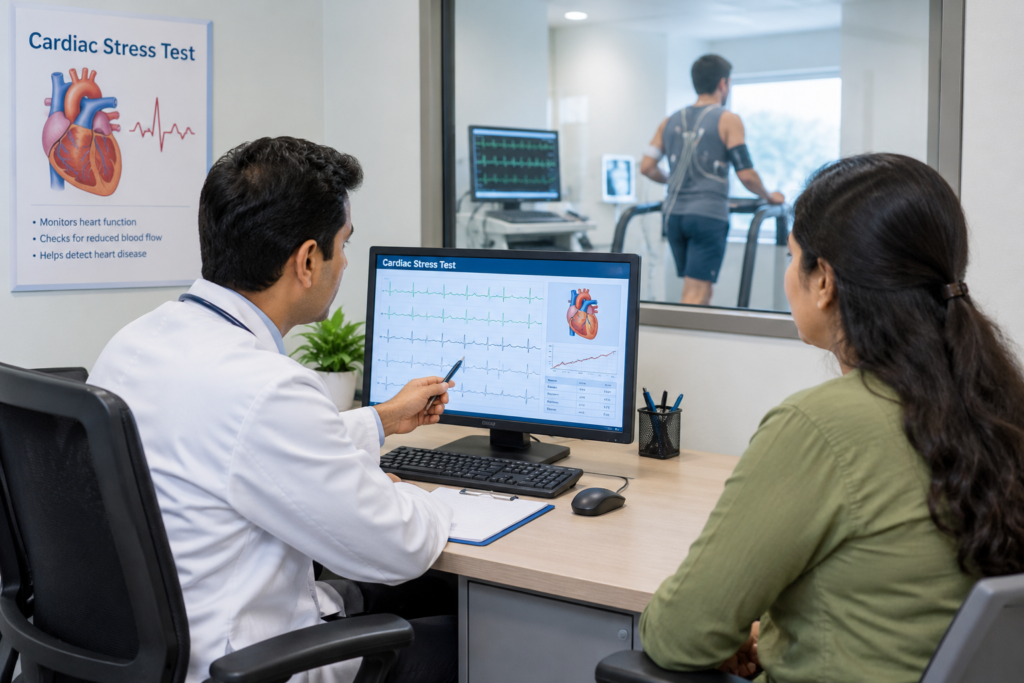
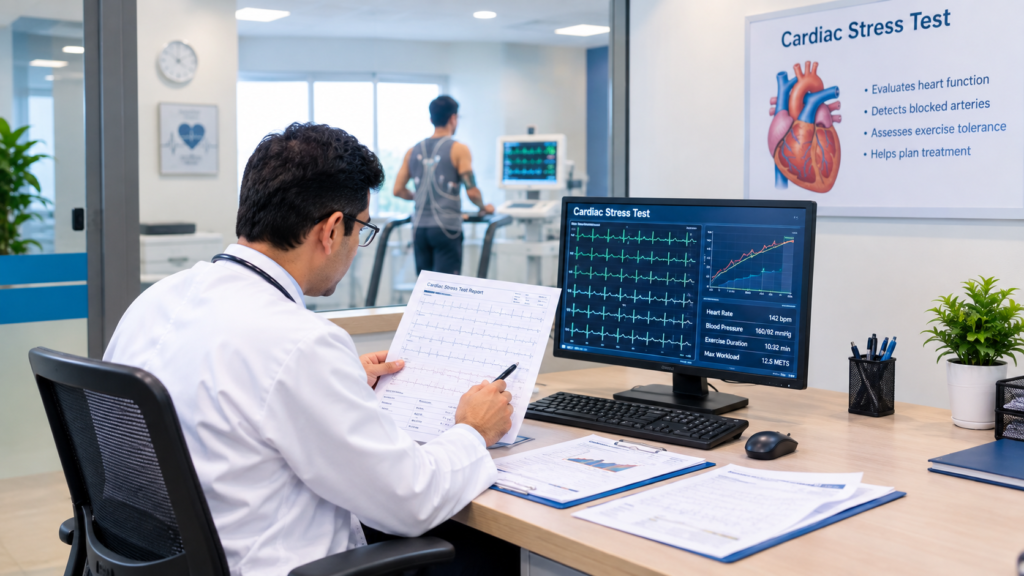
A cardiac stress test, often called an exercise stress test, evaluates how the heart responds when the body is working harder. During an exercise stress test, you may walk on a treadmill or use a stationary bicycle while your heart rate, heart rhythm, blood pressure, breathing, and ECG/EKG are monitored.
When you exercise, your heart needs more oxygen and blood. A stress test can help a cardiologist evaluate certain symptoms and conditions, including possible coronary artery disease and exercise-related heart rhythm problems.
Why Might a Cardiologist Recommend a Cardiac Stress Test?
A cardiologist may recommend cardiac testing when symptoms, medical history, or previous test results suggest that additional cardiovascular evaluation could be useful.
Common reasons include:
- Chest pain or pressure
- Shortness of breath during physical activity
- Lightheadedness or dizziness
- Palpitations
- Suspected arrhythmia
- Possible coronary artery disease
- Evaluation of exercise capacity
- Assessment of certain cardiac treatments
An exercise stress test may help determine whether symptoms have a possible heart-related cause and whether additional cardiac testing may be appropriate.
How to Prepare for a Cardiac Stress Test
Proper cardiac stress test preparation starts before you arrive at the cardiology clinic. The exact instructions depend on your test type, medications, symptoms, and overall health.
There is no universal preparation routine for every heart stress test.
Your healthcare team may provide instructions about:
- Food and fasting
- Caffeine
- Smoking
- Medications
- Physical activity
- Clothing
- Existing medical conditions
Following the instructions provided for your specific test is more important than following general advice found online.
2. Ask Whether You Need to Fast
Some types of cardiac testing may require you to avoid food or certain drinks for a specific period before the appointment.
However, fasting requirements vary depending on the type of test. Ask your cardiologist or testing team exactly when you should stop eating or drinking and what fluids, if any, are allowed.
Do not assume that every exercise stress test requires fasting.
3. Ask About Caffeine Before the Test
Caffeine can affect some types of cardiac stress testing, particularly certain stress imaging and medication-based tests.
Depending on your test, you may be asked to avoid:
- Coffee
- Tea
- Energy drinks
- Caffeinated soft drinks
- Chocolate
- Other caffeine-containing products
For some nuclear stress tests, patients may be instructed to avoid caffeine for 24 hours before testing. Follow the specific instructions given by your healthcare team.
4. Discuss Your Medications
Tell your cardiologist about all medications and supplements you take, including:
- Prescription medications
- Over-the-counter medicines
- Vitamins
- Herbal supplements
- Heart medications
- Blood pressure medications
- Respiratory medicines
Some medications can affect heart rate, blood pressure, or stress test results. Your healthcare team will determine whether any medication needs to be adjusted before the test.
Never stop or change a prescribed medication on your own.
5. Wear Comfortable Clothing and Shoes
If you are having an exercise stress test, you will need to walk on a treadmill or exercise on a stationary bicycle.
Wear:
- Comfortable, loose-fitting clothing
- Supportive walking or athletic shoes
- Clothing that allows easy movement
Comfortable footwear can make treadmill or bicycle exercise easier and safer.
6. Tell Your Cardiologist About Your Symptoms
Before your cardiac evaluation, tell your healthcare team if you experience:
- Chest pain
- Chest pressure
- Shortness of breath
- Palpitations
- Irregular heartbeat
- Dizziness
- Lightheadedness
- Unusual fatigue
This information can help the cardiologist understand your symptoms and determine the most appropriate diagnostic approach.
What Should You Avoid Before a Cardiac Stress Test?
Your restrictions depend on the specific stress test you are receiving. Your cardiologist may ask you to avoid or modify certain activities before testing.
| Preparation Factor | Why It May Matter |
| Caffeine | Can interfere with some stress imaging tests |
| Food | Some tests may require fasting |
| Smoking | May be restricted before certain tests |
| Certain medications | May affect heart rate or test results |
| Strenuous activity | Follow the instructions provided by your testing team |
The safest approach is to follow the preparation instructions given by the cardiology team performing your test.
What Happens During a Cardiac Stress Test?
Understanding the testing process can make your cardiac stress test appointment less confusing.
Before the Test
Your cardiologist or healthcare professional may review your:
- Medical history
- Current symptoms
- Exercise ability
- Medications
- Previous cardiac conditions
- Previous test results
Baseline measurements such as heart rate and blood pressure may also be recorded.
During an Exercise Stress Test
For a typical exercise stress test, electrodes are placed on your skin to record the heart’s electrical activity through an ECG/EKG.
You then walk on a treadmill or pedal a stationary bicycle. The exercise intensity gradually increases while your healthcare team monitors your:
- Heart rate
- Heart rhythm
- Blood pressure
- Breathing
- ECG/EKG
- Exercise tolerance
- Symptoms
You can tell the healthcare professional if you develop symptoms or become too uncomfortable. The test can be stopped when medically appropriate.
After the Stress Test
After exercise stops, your heart rate, blood pressure, and recovery are monitored.
Your cardiologist then reviews the findings along with your symptoms and medical history to determine whether further cardiac evaluation or testing is needed.
What Are the Different Types of Cardiac Stress Tests?
Not every patient undergoes the same type of heart stress test.
Exercise Stress Test
An exercise stress test uses a treadmill or stationary bicycle to increase the heart’s workload while ECG/EKG, heart rate, rhythm, blood pressure, and symptoms are monitored.
Stress Echocardiogram
A stress echocardiogram combines stress testing with ultrasound imaging of the heart. Depending on the patient’s condition and ability to exercise, the stress component may involve exercise or medication.
Nuclear Stress Test
A nuclear stress test uses a radioactive tracer and cardiac imaging to evaluate blood flow to the heart muscle during rest and stress. Preparation may include restrictions on caffeine, food, drinks, smoking, or certain medications.
Pharmacological Stress Test
If a patient cannot exercise adequately, medication may be used to create a stress response similar to exercise. This can be useful when physical limitations or other medical factors make an exercise stress test difficult.
What Can a Cardiac Stress Test Help Evaluate?
A cardiac stress test provides information about how your heart responds to increased workload. Depending on the type of test, it may help evaluate:
- Coronary artery disease
- Reduced blood flow to the heart
- Exercise-related chest pain
- Shortness of breath
- Exercise-related arrhythmias
- Exercise capacity
- Response to certain cardiac treatments
An exercise stress test can also help a healthcare professional decide whether additional testing, such as nuclear stress imaging or cardiac catheterization, may be appropriate.
Cardiac Stress Test vs. Other Heart Tests
A stress test is only one part of cardiovascular diagnostics. Different heart tests provide different information.
| Cardiac Test | What It Evaluates |
| ECG/EKG | Electrical activity and heart rhythm |
| Echocardiogram | Heart structure and function |
| Exercise Stress Test | Heart response to physical workload |
| Holter Monitor | Heart rhythm over an extended period |
| Nuclear Stress Test | Blood flow to the heart during rest and stress |
| Event Monitor | Intermittent or recurring abnormal heart rhythms |
A cardiologist may recommend one or more of these tests based on your symptoms, medical history, risk factors, and initial examination.
What Should You Bring to a Cardiac Stress Test?
Preparing a few items in advance can make your appointment easier.
Bring or have available:
- Current medication list
- Relevant medical records
- Previous cardiac test reports, if requested
- Inhaler, if prescribed
- Comfortable clothing
- Walking or athletic shoes
- Identification or insurance information, if required
- Questions you want to ask your cardiologist
If your testing center provides a specific preparation checklist, follow that list.
What If I Cannot Exercise During a Stress Test?
Some patients cannot exercise adequately because of physical limitations, mobility problems, reduced exercise capacity, or other medical conditions.
In selected situations, a pharmacological stress test may be considered. Medication can create changes in the heart that allow healthcare professionals to evaluate cardiovascular function without requiring the patient to exercise on a treadmill or bicycle.
Your cardiologist can determine which type of cardiac stress testing is appropriate for your situation.
When Should You See a Cardiologist?
If you experience recurring chest pain, shortness of breath, palpitations, dizziness, lightheadedness, or symptoms during physical activity, discuss them with a healthcare professional.
A cardiologist can review your symptoms and medical history and determine whether you may need a cardiac stress test, ECG/EKG, echocardiogram, Holter monitoring, or another cardiovascular evaluation.
If chest pain or other symptoms are severe, sudden, or potentially life-threatening, seek emergency medical care rather than waiting for a routine cardiology appointment.
Cardiac Testing in Cypress, TX at Nexus Specialty Clinic
If you have been advised to undergo cardiac testing in Cypress, TX, Nexus Specialty Clinic provides cardiology and diagnostic services for cardiovascular evaluation.
Its listed cardiology services include cardiac consultation, cardiac imaging, electrocardiogram (EKG), echocardiogram, cardiac electrophysiology, Holter/event monitoring, vascular studies, preventive cardiology, cardiac rehabilitation, and stress testing.
Nexus Specialty Clinic brings cardiology, pulmonology, sleep medicine, and diagnostic services together, with a focus on personalized care and advanced diagnostic technology.
Why Choose Nexus Specialty Clinic for Cardiac Testing?
When you need a cardiac stress test in Cypress, TX, having access to cardiology expertise and related diagnostic services can help create a more coordinated evaluation.
Experienced Cardiology Care
Nexus Specialty Clinic provides specialized cardiology care for conditions and symptoms including chest pain, angina, palpitations, heart disease, arrhythmias, and high blood pressure.
Board-Certified Cardiologist
Dr. Anil Goli is a board-certified cardiologist and cardiac electrophysiologist with more than 20 years of experience in diagnosing and treating complex heart conditions, including arrhythmias and syncope.
Comprehensive Cardiac Diagnostics
Nexus provides multiple cardiac diagnostic services, including stress testing, EKG, echocardiography, cardiac imaging, and Holter/event monitoring. This allows cardiac evaluation to be tailored to the patient’s symptoms and clinical needs.
Personalized Cardiology Care
The clinic emphasizes personalized care plans based on each patient’s condition, health needs, and lifestyle, supporting individualized cardiovascular care.
Integrated Specialty Care
Nexus combines cardiology, pulmonology, sleep medicine, and diagnostic services under one clinic. This can be useful when symptoms may involve overlapping heart, lung, or sleep-related concerns.
If you are preparing for a cardiac stress test in Cypress, TX, Nexus Specialty Clinic provides cardiology and diagnostic services to help evaluate your heart health and determine appropriate next steps.
FAQ’s – How to Prepare for a Cardiac Stress Test: A Patient Guide
Q1. How should I prepare for a cardiac stress test?
Ans. Follow your cardiologist’s instructions about food, caffeine, medications, smoking, and physical activity. Wear comfortable clothes and walking shoes if your test involves exercise.
Q2. Can I eat before a cardiac stress test?
Ans. It depends on the type of test. Some cardiac stress tests may require fasting or restrictions on food and drinks, while others have different preparation requirements. Ask your testing team for specific instructions.
Q3. Can I drink coffee before a stress test?
Ans. Some types of stress testing require patients to avoid caffeine before the test. Nuclear stress testing, for example, may require caffeine avoidance for 24 hours. Follow the instructions provided for your specific test.
Q4. Should I take my medications before a cardiac stress test?
Ans. Some medications can affect stress test results. Tell your cardiologist about all medications and supplements you take and follow their instructions. Do not stop or change prescribed medication without medical guidance.
Q5. What should I wear for a cardiac stress test?
Ans. Wear comfortable clothing and suitable walking or athletic shoes if you will exercise on a treadmill or stationary bicycle.