Are you searching for a spirometry test to understand your breathing problems? A spirometry test is a common lung function test that measures how much air you can breathe out and how quickly you can exhale it. It can help a pulmonologist evaluate breathing symptoms and assess conditions such as asthma, COPD, and other respiratory disorders.
For patients dealing with a persistent cough, wheezing, shortness of breath, or reduced exercise tolerance, spirometry can provide objective information about airflow. Understanding what the test measures, how it is performed, and what the results may mean can help you feel more prepared for your pulmonary evaluation.
Quick Answer
A spirometry test measures how much air you can forcefully breathe out and how quickly you can do it. The main measurements are forced vital capacity (FVC), forced expiratory volume in one second (FEV1), and the FEV1/FVC ratio. These values help a healthcare professional assess airflow and identify patterns that may suggest airway obstruction or another breathing problem.
Key Takeaways
- Spirometry is a non-invasive lung function test.
- It measures airflow and the volume of air you can forcefully exhale.
- The main measurements include FEV1, FVC, and FEV1/FVC ratio.
- Spirometry is commonly used when evaluating asthma and COPD.
- The test involves breathing forcefully into a device called a spirometer.
- Some patients may have spirometry before and after a bronchodilator.
- A pulmonologist or lung specialist interprets the results alongside your symptoms and medical history.
What Is a Spirometry Test?
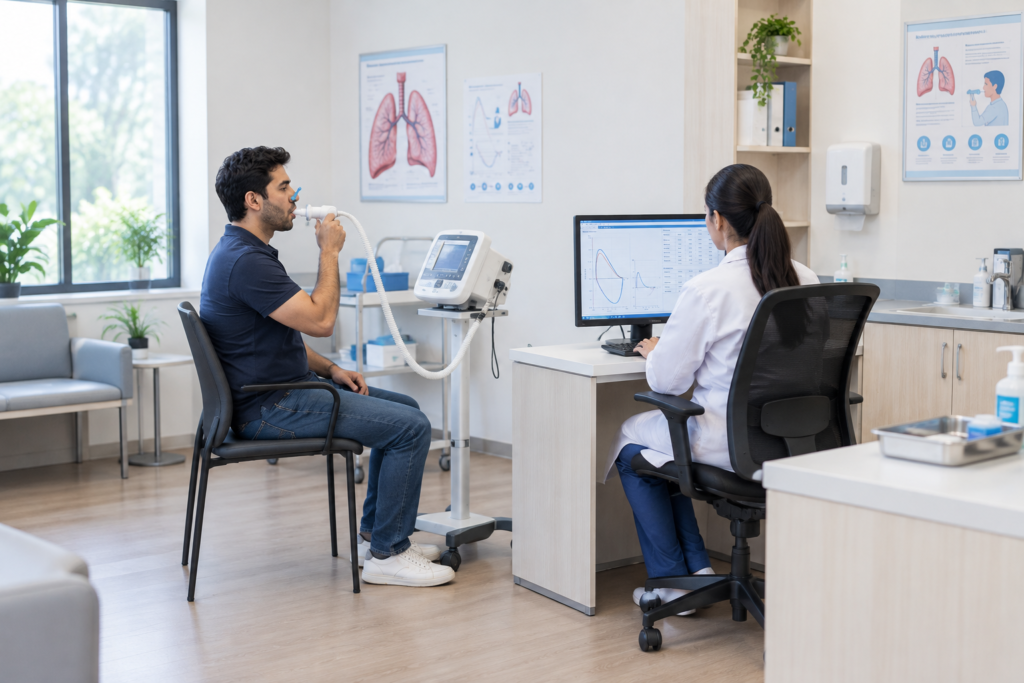
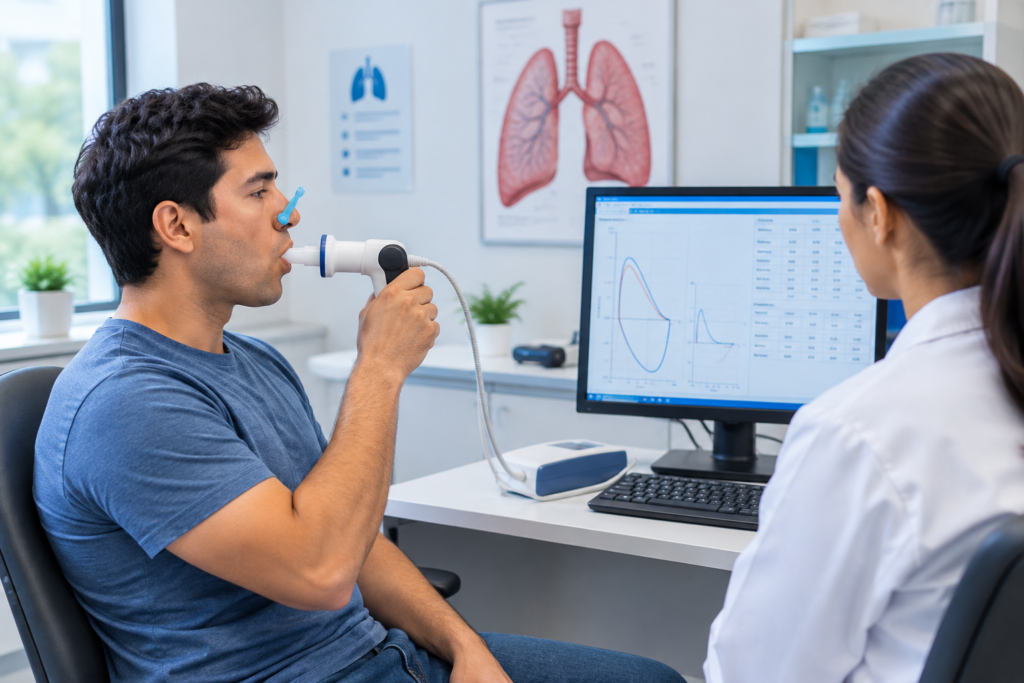
A spirometry test is a type of pulmonary function test (PFT) used to evaluate how well your lungs move air. You breathe through a mouthpiece connected to a machine called a spirometer, which records the amount of air you exhale and how quickly you exhale it.
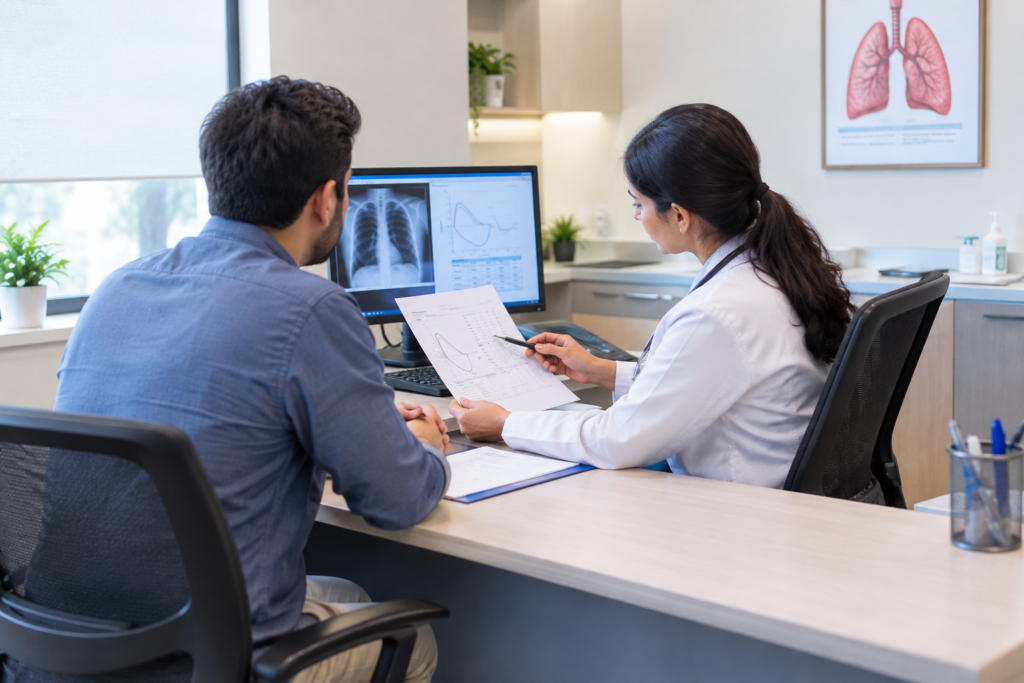
Unlike a chest X-ray or CT scan, which primarily show the structure of the lungs, spirometry provides information about lung function and airflow. This makes it an important part of a pulmonary evaluation when symptoms suggest an airway or breathing problem.
What Does a Spirometry Test Measure?
The test focuses on several measurements, with three being particularly important:
Forced Vital Capacity (FVC)
FVC is the total amount of air you can forcefully exhale after taking the deepest breath possible.
A lower-than-expected FVC can indicate that further evaluation of lung function is needed. However, spirometry alone does not confirm every type of lung disorder, so your pulmonologist may recommend additional pulmonary function tests when appropriate.
Forced Expiratory Volume in One Second (FEV1)
FEV1 measures how much air you can force out during the first second of a forceful exhalation.
This measurement provides information about how easily air moves through your airways. A reduced FEV1 can be associated with airflow limitation and is an important measurement when evaluating conditions such as COPD.
FEV1/FVC Ratio
The FEV1/FVC ratio compares the amount of air exhaled during the first second with the total amount forcefully exhaled.
A reduced ratio can indicate an obstructive airflow pattern, but interpretation should be based on appropriate reference values and the patient’s clinical picture.
In simple terms: FVC tells you how much air you can force out, FEV1 tells you how much comes out in the first second, and the FEV1/FVC ratio helps assess how easily air flows through the airways.
Why Would a Pulmonologist Recommend Spirometry?
A pulmonologist, also called a lung specialist, may recommend spirometry when symptoms suggest that your lungs or airways are not functioning normally.
A spirometry test may be useful when you experience:
- Persistent or chronic cough
- Wheezing
- Shortness of breath
- Chest tightness
- Difficulty breathing during exercise
- Reduced exercise tolerance
- Recurrent respiratory symptoms
- Symptoms that may indicate asthma or COPD
Spirometry is commonly used in the evaluation of asthma and COPD, although your doctor may use other tests and clinical information to reach a diagnosis.
What Conditions Can Spirometry Help Evaluate?
Spirometry is particularly useful when a healthcare professional needs objective information about airflow.
Asthma
A spirometry test for asthma can help evaluate airflow limitation. In some cases, spirometry is performed before and after a bronchodilator to determine whether airflow improves after the medication.
Because asthma symptoms can vary over time, a normal spirometry result does not necessarily explain every respiratory symptom. Your healthcare professional may consider additional testing when clinically appropriate.
COPD
Spirometry is an important test when evaluating chronic obstructive pulmonary disease (COPD). It measures how much air you can exhale and how quickly you can blow it out, providing objective information about airflow limitation.
Your doctor may use spirometry results along with your symptoms, smoking history, medical history, and other findings when assessing COPD.
Other Respiratory Conditions
Pulmonary function testing may also be used as part of the evaluation of other lung conditions, including certain interstitial lung diseases and cystic fibrosis. Spirometry is only one part of pulmonary testing, and additional tests may be needed depending on the suspected condition.
How Is a Spirometry Test Performed?
Knowing what happens during a spirometry test procedure can make the appointment feel much easier.
Step 1: You Sit Comfortably
Spirometry is generally performed while you are seated. A healthcare professional explains how to use the spirometer and demonstrates the breathing maneuver.
Step 2: A Nose Clip May Be Used
A nose clip may be placed over your nose to prevent air from escaping through your nostrils.
Step 3: You Take a Deep Breath
You will be asked to take a deep breath and fill your lungs as much as possible.
Step 4: You Exhale Forcefully
You then seal your lips around the mouthpiece and blow out as hard and completely as possible for several seconds.
Step 5: The Test Is Repeated
The breathing maneuver is usually repeated several times to obtain consistent measurements. Mayo Clinic notes that spirometry commonly takes about 15–30 minutes, depending on the testing process.
The technician may coach you during the test because your effort and technique can affect the quality of the measurements.
What Is a Bronchodilator Spirometry Test?
Sometimes your pulmonologist may want to compare your lung function before and after a bronchodilator.
A bronchodilator is an inhaled medicine that helps open the airways. You may first complete spirometry, receive the medication as directed, wait for the appropriate period, and then repeat the breathing measurements. Your healthcare team can compare the results to see whether your airflow changes after the medication.
This type of comparison can provide additional information when evaluating conditions such as asthma or other airflow problems.
How Should You Prepare for a Spirometry Test?
Most patients do not need extensive preparation, but your testing facility may provide specific instructions.
Wear Comfortable Clothing
Avoid tight clothing that could make it difficult to take a deep breath.
Avoid a Heavy Meal Before Testing
A large meal shortly before the test may make deep breathing uncomfortable. Your healthcare team may provide specific eating instructions.
Avoid Smoking Before the Test
Smoking can affect respiratory measurements. Testing facilities may instruct you not to smoke before the appointment. Follow the instructions provided by your healthcare team.
Discuss Your Medications
Some inhaled medications, particularly bronchodilators, may need to be withheld before certain types of spirometry. Do not stop an inhaler or other medication on your own. Ask your pulmonologist or testing team exactly what you should do before the test.
Your preparation may depend on whether spirometry is being performed alone or before and after bronchodilator use.
Is a Spirometry Test Painful?
No. Spirometry is generally non-invasive and does not involve needles or injections.
However, the test requires repeated deep breaths and forceful exhalation. Some people may briefly experience coughing, tiredness, shortness of breath, or lightheadedness after the breathing maneuvers.
Tell the technician if you feel unwell during testing so they can assess whether you should continue.
How Long Does a Spirometry Test Take?
A basic spirometry test can often be completed within about 15–30 minutes, although the exact time depends on the testing protocol and whether additional measurements are required.
If your appointment includes other pulmonary function tests, such as lung volume or diffusion testing, the overall visit may take longer.
How Are Spirometry Test Results Interpreted?
Your spirometry results are not interpreted by looking at one number alone.
A pulmonologist considers measurements such as:
| Measurement | What It Tells Your Doctor |
| FVC | Amount of air forcefully exhaled after a deep breath |
| FEV1 | Amount of air exhaled during the first second |
| FEV1/FVC | Relationship between these two measurements and airflow |
| Bronchodilator response | Whether airflow changes after airway-opening medication |
Results are compared with appropriate reference values, and the interpretation is considered alongside your age, height, symptoms, medical history, and other clinical findings.
What Does an Abnormal Spirometry Result Mean?
An abnormal result does not automatically mean you have a specific lung disease.
For example, a reduced FEV1/FVC ratio can suggest an obstructive airflow pattern, while a low FVC may indicate that additional testing is needed to determine whether restriction or another issue is present.
Your lung specialist may recommend additional testing, imaging, or follow-up depending on your symptoms and results.
Spirometry vs. Pulmonary Function Test: What Is the Difference?
These terms are sometimes used interchangeably, but they are not exactly the same.
Spirometry is one type of pulmonary function test that primarily measures airflow and forced exhaled volume.
A more comprehensive pulmonary function evaluation may include:
- Spirometry
- Lung volume testing
- Diffusion capacity testing
- Other specialized respiratory tests
Lung volume testing measures how much air the lungs can hold, while diffusion testing evaluates how effectively gases move from the lungs into the blood.
So, spirometry is part of pulmonary function testing, but a complete PFT may include more than spirometry.
When Should You See a Pulmonologist?
Consider speaking with a pulmonologist in Cypress, TX if you have persistent or unexplained respiratory symptoms such as:
- Chronic cough
- Frequent wheezing
- Ongoing shortness of breath
- Chest tightness
- Breathing difficulty during exercise
- Recurrent respiratory infections
- Worsening asthma symptoms
- Suspected COPD
A lung specialist can review your symptoms and determine whether a spirometry test, pulmonary function test, imaging study, or another respiratory evaluation is appropriate.
If you are experiencing severe or sudden breathing difficulty, seek urgent medical attention rather than waiting for a routine pulmonary appointment.
Spirometry Testing in Cypress, TX at Nexus Specialty Clinic
If you are looking for a spirometry test in Cypress, TX, Nexus Specialty Clinic provides pulmonary diagnostic services as part of its comprehensive respiratory care. The clinic lists pulmonary function studies, pulmonary consultations, lung function testing, and respiratory evaluations among its pulmonary services.
Nexus also provides evaluation and management for respiratory conditions such as asthma, COPD, chronic cough, bronchitis, shortness of breath, and other pulmonary conditions.
Why Choose Nexus Specialty Clinic for Spirometry and Lung Function Testing?
Choosing a clinic for a lung function test in Cypress, TX is about more than having access to a testing machine. Your symptoms, medical history, test results, and overall respiratory health need to be considered together.
Experienced Pulmonary Care
Nexus Specialty Clinic provides pulmonary care through experienced specialists, including Dr. Sujatha Goli, a pulmonologist and sleep medicine specialist with more than 20 years of experience in pulmonary, sleep, and critical care medicine.
Comprehensive Pulmonary Evaluation
A spirometry result is most useful when interpreted in the context of your symptoms and medical history. Nexus provides pulmonary consultations and diagnostic services to support a broader respiratory evaluation.
Advanced Lung Function Testing
Nexus lists pulmonary function studies and spirometry testing among its diagnostic services, helping evaluate airflow and overall lung performance when clinically appropriate.
Personalized Treatment Planning
Respiratory symptoms can have different causes. Nexus emphasizes personalized care based on the patient’s symptoms, medical history, diagnostic findings, and individual healthcare needs.
Integrated Heart, Lung and Sleep Care
Nexus combines cardiology, pulmonology, sleep medicine, and diagnostic services in one clinic. This can be useful when breathing symptoms overlap with cardiovascular or sleep-related concerns.
If you need a spirometry test in Cypress, TX, Nexus Specialty Clinic can provide pulmonary evaluation and lung function testing to help your healthcare team better understand your breathing concerns and determine the appropriate next steps.
FAQ’s – Spirometry Test: What It Measures and What to Expect
Q2. What does spirometry measure?
Q3. Is spirometry used to diagnose asthma?
Ans. Spirometry is an important test in the evaluation of asthma. Your healthcare professional may also compare lung function before and after a bronchodilator to assess changes in airflow.
Q4. Can spirometry detect COPD?
Ans. Spirometry is an important diagnostic test when evaluating COPD because it measures how much air you can exhale and how quickly you can blow it out. Your doctor considers the results together with symptoms and other clinical information.
Q5. Does a spirometry test hurt?
Ans. Spirometry is generally painless and non-invasive. The forceful breathing required can temporarily cause coughing, tiredness, or lightheadedness in some people.