

Are you experiencing loud snoring, breathing pauses, gasping during sleep, or excessive daytime sleepiness and wondering if you need a Sleep Apnea Diagnosis in Cypress? These symptoms may indicate sleep apnea, but they cannot confirm the condition on their own. Proper testing can help identify abnormal breathing during sleep and determine whether further treatment is needed.
A sleep apnea evaluation usually begins with a review of your symptoms, sleep patterns, and medical history. Depending on your situation, a healthcare provider may recommend a sleep apnea test, an overnight sleep study, or a home sleep apnea test. In this guide, you’ll learn what to expect during testing, how different sleep tests work, and what happens after your results are reviewed.
Quick Answer
Sleep apnea is diagnosed through a medical evaluation followed by appropriate sleep apnea testing. A healthcare provider may recommend an in-lab polysomnography or a home sleep apnea test to evaluate breathing, oxygen levels, heart rate, and other sleep-related measurements.
Key Takeaways
- A sleep apnea evaluation begins with symptoms, medical history, and risk factors.
- A sleep apnea test helps identify abnormal breathing during sleep.
- A sleep study provides important information about breathing and sleep patterns.
- Polysomnography provides comprehensive overnight monitoring.
- A home sleep study allows selected patients to test at home.
- A sleep specialist can determine which diagnostic test is appropriate.
- Early Sleep Apnea Diagnosis in Cypress can help guide appropriate care.
When Should You Consider Sleep Apnea Testing?
You should consider sleep apnea testing if symptoms such as loud snoring, breathing pauses, or excessive daytime sleepiness occur regularly. A healthcare provider can perform a sleep apnea screening and determine whether further diagnostic testing is needed.
You may benefit from an evaluation if you experience:
- Loud or persistent snoring
- Witnessed breathing pauses
- Gasping or choking during sleep
- Excessive daytime sleepiness
- Morning headaches
- Restless or fragmented sleep
- Difficulty concentrating
- Persistent fatigue despite adequate sleep
If these symptoms are affecting your sleep or daily activities, a sleep apnea consultation can help determine whether a formal sleep test is appropriate.
What Happens During a Sleep Apnea Evaluation?
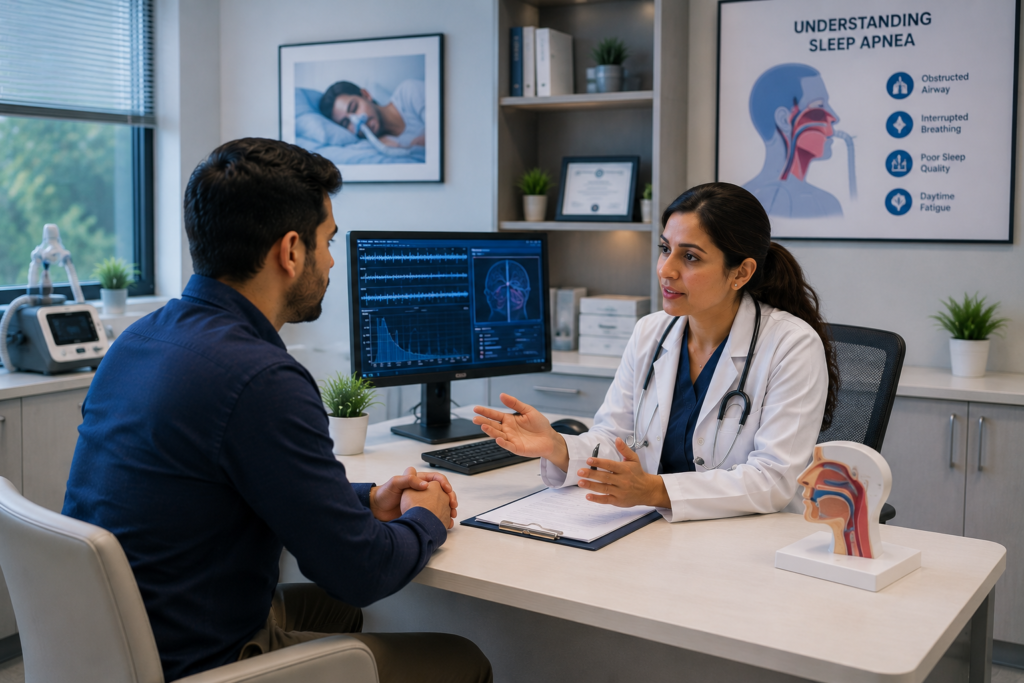
A sleep apnea evaluation begins with a discussion about your symptoms, sleep habits, medical history, and other factors that may increase your risk of sleep apnea. This information helps your healthcare provider determine whether sleep apnea testing is necessary.
During the evaluation, your provider may discuss:
- Snoring and nighttime breathing problems
- Episodes of gasping or choking
- Daytime fatigue or sleepiness
- Sleep quality and nighttime awakenings
- Current medications
- Existing health conditions
- Previous sleep-related concerns
- Relevant risk factors
Your provider may then recommend an appropriate sleep apnea test based on your individual symptoms and clinical needs.
Which Tests Are Used to Diagnose Sleep Apnea?
The two commonly used approaches for evaluating suspected sleep apnea are polysomnography and a home sleep apnea test. The appropriate test depends on your symptoms, medical history, and the findings from your initial evaluation.
Polysomnography
Polysomnography is a comprehensive overnight sleep study performed in a sleep facility. It records multiple body functions while you sleep to provide detailed information about your breathing and sleep patterns.
A polysomnography sleep study may monitor:
- Breathing patterns
- Blood oxygen levels
- Heart rate
- Brain activity
- Eye movements
- Muscle activity
- Body movements
- Sleep stages
This detailed monitoring can provide valuable information when a comprehensive evaluation is needed for Sleep Apnea Diagnosis in Cypress.
Home Sleep Apnea Test
A home sleep apnea test allows selected patients to complete sleep apnea testing in their own home. The equipment records specific breathing and oxygen-related measurements while you sleep.
A home sleep study may be considered when:
- Sleep apnea is suspected based on symptoms
- The patient is considered appropriate for home testing
- An overnight home-based evaluation is clinically suitable
A home sleep study can be convenient, but it is not appropriate for every patient. Your healthcare provider should determine which type of sleep apnea test is suitable for your situation.
Sleep Study vs. Home Sleep Study: What’s the Difference?
Both an in-lab sleep study and a home sleep study can help evaluate suspected sleep apnea, but they differ in how testing is performed and how much information is collected.
| Feature | In-Lab Sleep Study | Home Sleep Study |
| Location | Sleep facility | Patient’s home |
| Monitoring | More comprehensive | Focused sleep-related measurements |
| Sleep stages | Can be assessed | Not comprehensively assessed |
| Convenience | Requires overnight visit | Conducted at home |
| Use | Selected patients requiring detailed testing | Selected patients with suspected sleep apnea |
The choice should depend on your clinical situation rather than convenience alone. A sleep specialist can determine whether an in-lab study or home sleep apnea test is more appropriate.
How Are Sleep Study Results Interpreted?
Sleep study results are reviewed by a qualified healthcare professional along with your symptoms and medical history. The findings can show whether abnormal breathing events, oxygen changes, or other sleep-related problems occurred during the test.
- Apnea events
- Hypopnea events
- Breathing patterns
- Oxygen levels
- Heart rate
- Sleep-related measurements
- Apnea-Hypopnea Index (AHI)
The results should not be interpreted based on a single number alone. Your sleep apnea doctor will consider the complete clinical picture before confirming a diagnosis and discussing the next steps.

What Happens After a Sleep Apnea Diagnosis?
After a Sleep Apnea Diagnosis in Cypress, your healthcare provider will explain your results and discuss the appropriate next steps. Treatment recommendations depend on the type and severity of sleep apnea, symptoms, and your overall health.
- Reviewing your sleep study results
- Discussing treatment options
- Considering positive airway pressure therapy when appropriate
- Monitoring symptoms and treatment response
- Scheduling follow-up care
A confirmed diagnosis gives your healthcare provider a clearer basis for developing an individualized care plan.
When Should You See a Sleep Apnea Doctor?
You should consider seeing a sleep apnea doctor if persistent snoring, breathing pauses, gasping during sleep, or excessive daytime sleepiness are affecting your daily life. A sleep specialist can evaluate your symptoms and determine whether sleep apnea testing is appropriate.
- Snore loudly most nights
- Stop breathing during sleep
- Wake up gasping or choking
- Feel excessively tired during the day
- Have persistent morning headaches
- Struggle with concentration because of poor sleep
If you’re searching for a sleep apnea test near me, starting with a sleep apnea consultation can help determine the appropriate diagnostic approach rather than relying on self-assessment.
Sleep Apnea Diagnosis in Cypress at Nexus Specialty Clinic
At Nexus Specialty Clinic, patients have access to coordinated care for sleep, heart, and lung health in Cypress, TX. The clinic identifies Sleep Medicine, Pulmonology, Cardiology, and Diagnostic & Testing Services as part of its comprehensive care model.
For patients concerned about possible sleep apnea, the evaluation process focuses on understanding symptoms and determining the appropriate diagnostic approach. Nexus Specialty Clinic emphasizes personalized care and advanced diagnostic technology as part of its patient-centered model.
The clinic is located at North Cypress Medical Plaza II, 21212 Northwest Freeway, Suite 265, Cypress, TX 77429, providing a convenient location for patients seeking specialty care in Cypress.
Why Choose Nexus Specialty Clinic?
Choosing the right provider for Sleep Apnea Diagnosis in Cypress can make the diagnostic process easier to understand and manage. At Nexus Specialty Clinic, sleep care is part of a broader multispecialty model that brings cardiology, pulmonology, sleep medicine, and diagnostic services together.
- Sleep Medicine Expertise
Nexus provides sleep medicine care for patients who need evaluation and management of sleep-related concerns. - Comprehensive Evaluation
Symptoms, medical history, and diagnostic findings can be considered as part of a coordinated approach to care. - Advanced Diagnostic Technology
The clinic highlights advanced technology to support accurate and timely diagnosis. - Personalized Care Plans
Nexus emphasizes personalized care based on each patient’s condition and individual needs. - Multispecialty Support
Access to cardiology, pulmonology, sleep medicine, and diagnostic services can support coordinated care when conditions overlap. - Convenient Cypress Location
Nexus Specialty Clinic is located in Cypress, TX, making it accessible for patients seeking sleep-related specialty care in the area.
The goal is to help patients understand their symptoms, complete appropriate evaluation, and move toward the next step in their care.
Ready to Improve Your Sleep? Consult a Sleep Doctor
If loud snoring, breathing pauses, or daytime sleepiness are affecting your daily life, schedule a sleep apnea consultation with Nexus Specialty Clinic. A healthcare professional can evaluate your symptoms and determine whether sleep apnea testing is appropriate.
Contact Information
Nexus Specialty Clinic
Address : North Cypress Medical Plaza II, 21212 Northwest Freeway Suite 265 Cypress, TX 77429
Contact : (281) 653-9123
Conclusion
A Sleep Apnea Diagnosis in Cypress begins with understanding your symptoms and completing an appropriate sleep apnea evaluation. Depending on your individual situation, your provider may recommend an in-lab sleep study, polysomnography, or home sleep apnea test.
Understanding what each test involves can help you feel more prepared and make informed decisions about your care. If you are experiencing persistent signs of sleep apnea, speaking with a sleep specialist can help you determine the right diagnostic next step.
FAQs – Sleep Apnea Diagnosis: What Tests Can You Expect?
Q1. How is sleep apnea diagnosed?
Ans. Sleep apnea is diagnosed through a medical evaluation and, when appropriate, a sleep study or home sleep apnea test. Results are reviewed along with your symptoms and medical history.
Q2. What test is used to diagnose sleep apnea?
Ans. A sleep apnea test may involve an in-lab polysomnography or a home sleep apnea test, depending on your symptoms and clinical needs.
Q3. What is polysomnography?
Ans. Polysomnography is an overnight sleep study that records body functions such as breathing, oxygen levels, heart rate, brain activity, and sleep-related measurements.
Q4. What is a home sleep apnea test?
Ans. A home sleep apnea test is a diagnostic test that allows selected patients to monitor specific breathing and oxygen-related measurements while sleeping at home.
Q5. Is a home sleep study suitable for everyone?
Ans. No. A home sleep study is not appropriate for every patient. A healthcare provider should determine whether home testing is suitable based on your symptoms and medical history.