Are you searching for a Stress Test in Cypress because you’re experiencing chest pain, shortness of breath, palpitations, or other heart-related symptoms? If your doctor has recommended a stress test or an electrocardiogram (ECG), you may be wondering which test is right for you. Although both evaluate your heart, they serve different purposes and provide unique insights into your heart function and overall cardiovascular health.
Understanding the difference between these tests can help you make informed decisions about your care. In this guide, you’ll learn when an ECG or stress test is recommended, what each procedure involves, and how the experienced cardiology team at Nexus Specialty Clinic provides accurate diagnosis and personalized heart care to help protect your long-term cardiovascular health.
Quick Answer
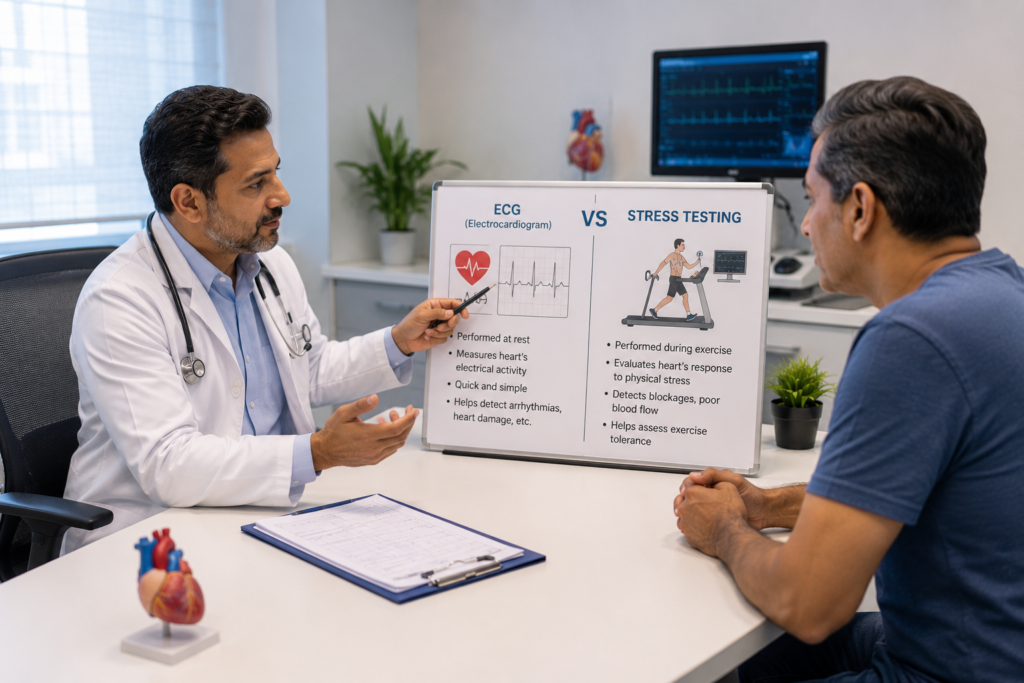
A Stress Test in Cypress evaluates how your heart performs during physical activity, while an electrocardiogram (ECG) records your heart rhythm and electrical activity at rest. Your cardiologist will recommend the most appropriate test based on your symptoms, medical history, and overall heart health check.
Key Takeaways
- A Stress Test in Cypress helps evaluate your heart during physical activity.
- An electrocardiogram (ECG) records your heart rhythm and electrical activity at rest.
- Both tests play an important role in diagnosing heart conditions and monitoring heart function.
- Symptoms like palpitations, chest pain, and shortness of breath may require further cardiac evaluation.
- Your cardiologist will recommend the right test based on your symptoms and medical history.
- Early diagnosis supports better cardiovascular health and timely treatment.
What Is an ECG?
An electrocardiogram (ECG) is a quick, painless test that records your heart’s electrical activity while you are at rest. Although many patients searching for a Stress Test in Cypress also hear about an ECG, these tests serve different purposes and often complement one another during a cardiac evaluation.
An ECG helps evaluate:
- Heart rhythm and electrical signals
- Abnormal heartbeat (Arrhythmia)
- Evidence of previous or ongoing heart attacks
- Heart enlargement
- Conduction abnormalities
- Effects of certain medications on the heart
The test is completed within a few minutes by placing small electrodes on your chest, arms, and legs. The recorded electrical signals help your cardiologist identify irregularities that may not be noticeable during a routine physical examination.
If you’re experiencing palpitations, dizziness, fainting, or persistent chest discomfort, an ECG in Cypress is often the first step in evaluating your heart health and determining whether additional testing is needed.

What Is a Stress Test?
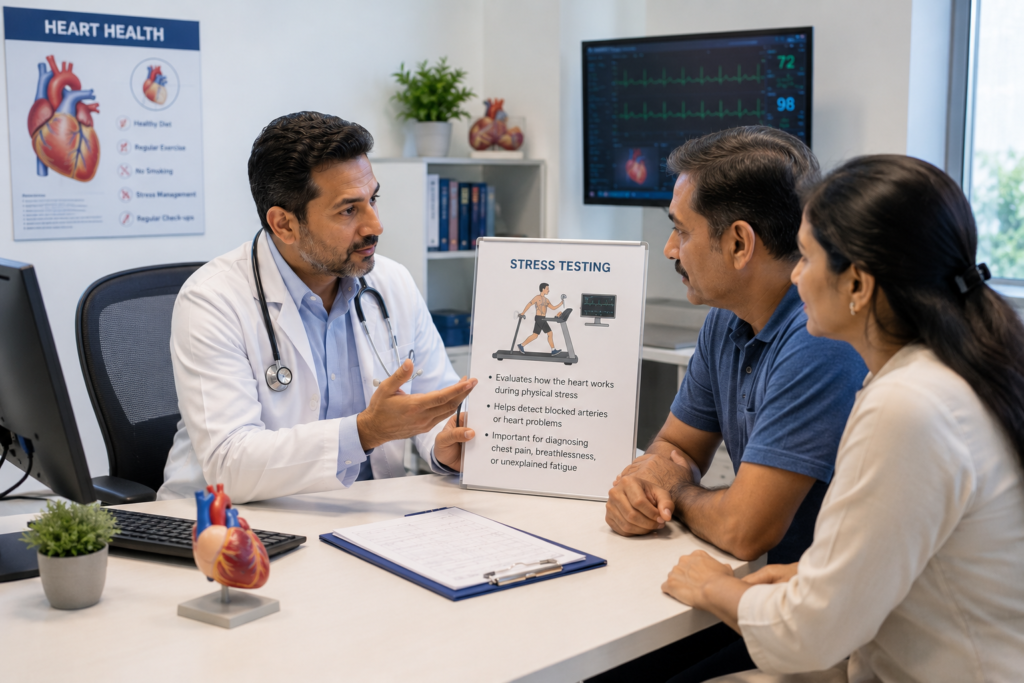
A Stress Test in Cypress measures how well your heart works when it is under physical stress. Unlike a resting ECG, this test evaluates your heart’s ability to pump blood efficiently during exercise, making it especially useful for detecting problems that may not appear while you’re at rest.
Depending on your health and physical condition, your cardiologist may recommend an exercise stress test or a medication-assisted stress test if you are unable to walk on a treadmill.
A stress test helps assess:
- Blood flow to the heart
- Exercise tolerance
- Heart rate response during activity
- Chest pain triggered by exercise
- Possible coronary artery disease
- Overall heart function
By monitoring your heart during increased activity, a stress test provides valuable information that helps determine whether your heart is receiving enough oxygen-rich blood and whether further cardiac evaluation is necessary.
Stress Test vs. ECG: What’s the Difference?
| Feature | Electrocardiogram (ECG) | Stress Test |
| Purpose | Records electrical activity | Evaluates heart performance during exercise |
| Performed | While resting | During walking on a treadmill or medication-induced stress |
| Detects | Heart rhythm problems, arrhythmias | Reduced blood flow, coronary artery disease |
| Duration | 5–10 minutes | 20–45 minutes |
| Best For | Abnormal heartbeat, palpitations | Chest pain during activity, exercise intolerance |
Which Heart Test Do You Need?
The right heart test depends on your symptoms and overall heart health. Your cardiologist will recommend an ECG or Stress Test in Cypress based on what they suspect is causing your symptoms.
You may need an ECG if you experience:
- Frequent palpitations
- Irregular heartbeat
- Dizziness or fainting
- Chest discomfort at rest
- Abnormal findings during a routine examination
You may need a Stress Test if you experience:
- Chest pain during physical activity
- Shortness of breath while walking or exercising
- Fatigue during exercise
- High blood pressure or diabetes with cardiac symptoms
- A family history of heart disease
- Suspected coronary artery disease
In some cases, your cardiologist may recommend both tests to gain a complete understanding of your heart function and develop the most appropriate treatment plan.
What to Expect During the Test
Whether you’re scheduled for an ECG in Cypress or a Stress Test in Cypress, both procedures are safe, non-invasive, and performed under the supervision of trained healthcare professionals.
During an ECG
The test begins with small electrodes placed on your chest, arms, and legs. These sensors record your heart rhythm and electrical activity while you remain still for a few minutes. The procedure is painless, requires no recovery time, and provides immediate information about your heart function.
During a Stress Test
For a Stress Test in Cypress, electrodes are attached to your chest before you begin walking on a treadmill or exercising on a stationary machine. As the intensity gradually increases, your healthcare team continuously monitors your heart monitoring, blood pressure, breathing, and symptoms. If you are unable to exercise safely, medication may be used to simulate the effects of physical activity on your heart.
Once the test is complete, your cardiologist reviews the results to determine whether your heart is functioning normally or if further evaluation or treatment is needed.
About Nexus Specialty Clinic
Choosing the right healthcare provider is just as important as choosing the right heart test. At Nexus Specialty Clinic, we provide comprehensive cardiac care backed by experienced specialists, advanced diagnostic technology, and personalized treatment plans to help patients make informed decisions about their heart health.
Whether you need an ECG in Cypress, a Stress Test in Cypress, or a complete heart health check, our team delivers accurate evaluations to assess heart function, detect abnormal heartbeats, and identify conditions such as coronary artery disease. Our patient-centered approach ensures you receive timely diagnosis, coordinated care, and long-term support for better cardiovascular health.
Why Choose Nexus Specialty Clinic?
When it comes to protecting your heart, experience and accuracy matter. At Nexus Specialty Clinic, we combine advanced diagnostic technology with compassionate, evidence-based care to provide accurate cardiac evaluations and personalized treatment for every patient seeking a Stress Test in Cypress.
Experienced Cardiologists
Our experienced cardiology team evaluates symptoms such as chest pain, palpitations, shortness of breath, and abnormal heartbeat to identify the underlying cause and recommend the most appropriate diagnostic test.
Advanced Cardiac Diagnostic Technology
We use modern diagnostic equipment to perform electrocardiograms (ECGs), stress testing, and comprehensive heart monitoring, helping us detect heart conditions with greater accuracy.
Personalized Heart Care
No two patients are alike. We create individualized care plans based on your symptoms, medical history, lifestyle, and diagnostic results to support better heart function and long-term wellness.
Comprehensive Cardiac Evaluations
From preventive heart health checks to advanced cardiac testing, we provide comprehensive evaluations under one roof, making it easier to receive coordinated care without unnecessary delays.
Patient-Centered, Evidence-Based Care
We believe patients deserve clear communication, accurate diagnosis, and treatment recommendations based on the latest clinical guidelines. Our focus is on delivering high-quality care while helping you understand every step of your heart health journey.
Convenient Care in Cypress, TX
Conveniently located in North Cypress Medical Plaza II, our clinic serves patients throughout Cypress and nearby communities with accessible, high-quality cardiac care and diagnostic services.
Whether you’re experiencing new symptoms or need a routine cardiac evaluation, our team is committed to helping you protect your cardiovascular health with expert care and advanced testing.
Prioritize Your Heart Health Today
If you’re experiencing chest pain, palpitations, shortness of breath, or have been advised to undergo a Stress Test in Cypress, don’t delay your heart evaluation. Schedule a consultation with the experienced cardiology team at Nexus Specialty Clinic for accurate diagnosis, advanced cardiac testing, and personalized care designed to keep your heart healthy.
Contact Information
Nexus Specialty Clinic
Address : North Cypress Medical Plaza II, 21212 Northwest Freeway Suite 265 Cypress, TX 77429
Contact : (281) 653-9123
Conclusion
Choosing between an electrocardiogram (ECG) and a Stress Test in Cypress doesn’t have to be confusing. While an ECG evaluates your heart rhythm at rest, a stress test measures how well your heart performs during physical activity. Together, these tests provide valuable insights into your heart function and help diagnose conditions before they become more serious.
If you’re experiencing symptoms such as chest pain, shortness of breath, palpitations, or fatigue during exercise, seeking timely medical evaluation is essential. At Nexus Specialty Clinic, our experienced cardiologists provide comprehensive cardiac assessments, advanced diagnostic testing, and personalized treatment plans to help you maintain long-term cardiovascular health with confidence.
FAQ’s – Need a Stress Test or ECG in Cypress, TX? Here’s How to Choose the Right Heart Test
Q1. What is the difference between an ECG and a stress test?
Ans. An electrocardiogram (ECG) records your heart’s electrical activity while you’re resting, whereas a Stress Test in Cypress evaluates how your heart performs during physical activity.
Q2. Which heart test is better for chest pain?
Ans. It depends on your symptoms. An ECG is often used as the initial evaluation, while a stress test helps determine whether chest pain is caused by reduced blood flow to the heart during exercise.
Q3. Can an ECG detect blocked arteries?
Ans. An ECG may detect signs of heart damage or rhythm abnormalities, but it cannot always identify blocked arteries. Your doctor may recommend a stress test or additional imaging if needed.
Q4. How long does a stress test take?
Ans. A stress test typically takes 20 to 45 minutes, including preparation, exercise, and recovery time.
Q5. When should I get an ECG?
Ans. An ECG in Cypress may be recommended if you experience palpitations, dizziness, fainting, chest pain, or an abnormal heartbeat.