
Are you wondering about wet cough vs dry cough and when a cough may require medical attention? A wet cough usually produces mucus or phlegm, while a dry cough does not bring up mucus. Both types can occur with respiratory infections, allergies, asthma, or other breathing conditions, so understanding the difference can help you know when to seek appropriate care.
The wet cough vs dry cough difference is mainly based on whether mucus is present. A short-term cough may improve on its own, but persistent coughing, coughing and wheezing, breathing difficulties, or other concerning symptoms may require evaluation by a healthcare professional. In this guide, learn about common causes, how long a cough may last, warning signs, and when specialized respiratory care may be appropriate.
Wet Cough vs Dry Cough: What Is the Difference?
Understanding wet cough vs dry cough starts with recognizing how each type feels and sounds.
A wet cough, also called a productive cough, brings up mucus or phlegm from the airways. You may notice a feeling of congestion in your chest or hear a rattling sound when coughing.
A dry cough does not produce mucus. It may feel irritating or tickling and can sometimes cause a dry and itchy throat, especially when coughing continues throughout the day or night.
Wet Cough
A wet cough may occur when the airways produce excess mucus. The mucus can help trap irritants, particles, or infectious material so the body can clear them through coughing.
A mucus-producing cough may occur with:
- Respiratory infections
- Postnasal drainage
- Bronchitis
- Asthma
- Chronic respiratory conditions
- Other causes of airway irritation
Dry Cough
A dry cough does not produce phlegm. Common dry cough causes include airway irritation, allergies, asthma, viral infections, acid reflux, and certain medications.
Some people may also experience coughing that becomes worse at night or after exposure to smoke, dust, fragrances, or other irritants.
What Causes Wet and Dry Cough?
The causes of a cough can vary significantly from person to person. Identifying the cause of dry cough or a wet cough is important because treatment depends on the underlying condition.
Common Causes of a Wet Cough
A wet cough can develop when mucus builds up in the respiratory tract. Common causes include respiratory infections, bronchitis, postnasal drainage, and certain chronic lung conditions.
People with a wet cough may notice:
- Coughing up mucus or phlegm
- Chest congestion
- A rattling or congested sound
- Throat irritation
- Shortness of breath in some cases
The color or amount of mucus alone does not always identify the cause. A healthcare professional can consider your complete symptoms and medical history.
Common Causes of a Dry Cough
A dry cough can have many possible causes. Viral respiratory infections and allergies are common reasons, but asthma, acid reflux, environmental irritants, and certain medications may also contribute.
Possible dry cough causes include:
- Allergies
- Asthma
- Viral respiratory infections
- Smoke or air pollution
- Acid reflux
- Medication-related irritation
- Airway inflammation
If a dry cough continues or repeatedly returns, professional evaluation can help determine the underlying cause rather than relying only on a dry cough suppressant or home remedy.
How Long Should a Cough Last?

How long a cough lasts can depend on its cause, your overall health, and whether an underlying respiratory condition is present.
A cough associated with a temporary respiratory infection may gradually improve as the infection resolves. However, a cough that persists, repeatedly returns, or interferes with sleep and daily activities may require medical evaluation.
You should consider talking with a healthcare professional if your cough:
- Does not improve as expected
- Keeps coming back
- Interferes with sleep
- Affects your daily activities
- Occurs with wheezing or breathing difficulties
- Is associated with chest discomfort
- Occurs with other concerning symptoms
People with chronic respiratory conditions may also require ongoing monitoring when coughing changes or becomes more frequent.
Wet Cough vs Dry Cough: When Should You See a Doctor?
Knowing when to seek care is an important part of understanding wet cough vs dry cough. A mild cough may not always require specialist treatment, but persistent or worsening symptoms should not be ignored.
Consider speaking with a healthcare professional if you experience persistent coughing, repeated episodes of wheezing cough, shortness of breath, or symptoms that do not improve with routine care.
A medical evaluation may be particularly important if you have a known respiratory condition such as asthma or chronic obstructive pulmonary disease (COPD).
The appropriate treatment depends on the cause of the cough. A healthcare provider can review your symptoms and determine whether additional testing or treatment is appropriate.
Warning Signs That Need Medical Attention
Certain symptoms occurring with a cough may indicate that you need prompt medical evaluation.
Seek medical attention if coughing is accompanied by:
- Significant difficulty breathing
- Chest pain or pressure
- Coughing up blood
- Severe or worsening shortness of breath
- Blue or gray lips or skin
- Confusion or unusual weakness
- High or persistent fever
- Rapid worsening of symptoms
Symptoms such as wheezing while breathing out, significant coughing and wheezing, or worsening breathing difficulties may also require evaluation.
If you experience severe breathing difficulty or another medical emergency, seek immediate emergency medical care.
How a Doctor Evaluates a Persistent Cough
When a cough continues, a healthcare professional may begin by asking about your symptoms, medical history, medications, lifestyle, and possible environmental triggers.
The evaluation may include:
- Reviewing Your Symptoms
Your doctor may ask whether your cough is wet or dry, how long it has been present, whether it occurs at certain times, and whether you notice mucus, wheezing, chest discomfort, or shortness of breath.
Understanding the pattern can provide useful information about possible causes.
- Checking Your Breathing
A physical examination may include listening to your lungs and checking your breathing pattern and oxygen levels when appropriate.
Symptoms such as lung inflammation symptoms or inflamed lungs symptoms may require further evaluation depending on the clinical situation.
- Performing Lung Function Testing
If a respiratory condition is suspected, your provider may recommend pulmonary function testing.
A spirometry test can measure airflow and provide information about how effectively you breathe air in and out. Additional testing may be considered depending on your symptoms and medical history.
Treatment Options for Wet and Dry Coughs
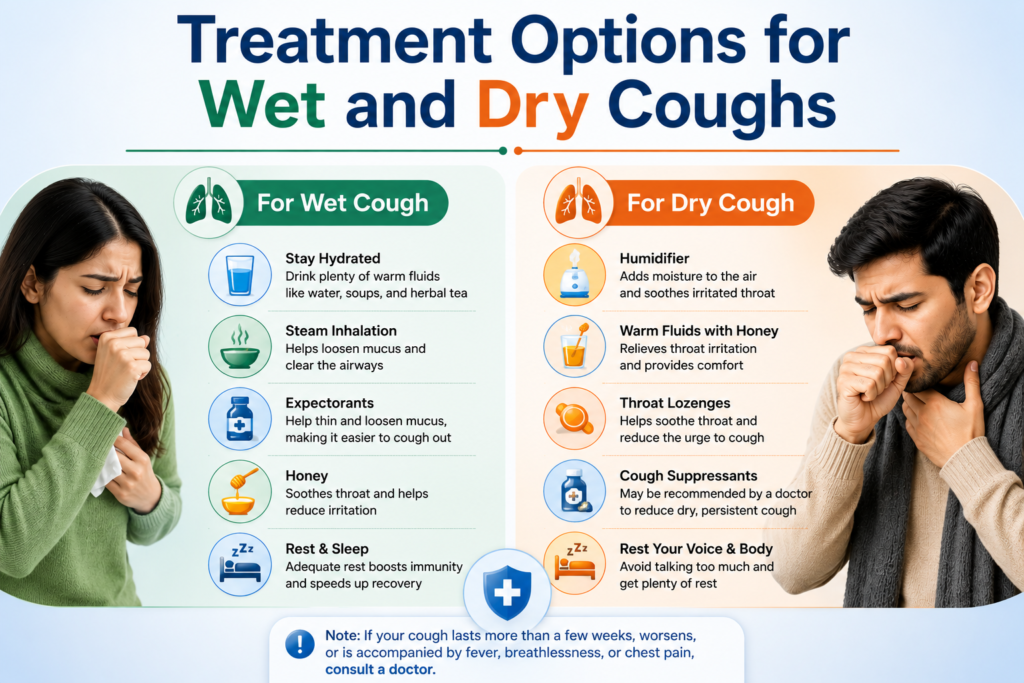
The right wet cough vs dry cough treatment depends on what is causing the cough. There is not one universal solution for dry cough or wet cough because different conditions require different approaches.
- Treatment for a Wet Cough
Treatment may focus on addressing the underlying cause and supporting airway clearance. Depending on the diagnosis, a healthcare provider may recommend medications, hydration, monitoring, or other appropriate treatment.
It is important to follow medical guidance rather than automatically trying to suppress every mucus-producing cough.
- Dry Cough Treatment
Dry cough treatment depends on the underlying cause. If allergies, asthma, infection, reflux, medication effects, or environmental irritation are contributing to the cough, addressing that cause may help improve symptoms.
For temporary irritation, some people may find dry cough relief through measures such as staying hydrated, avoiding known irritants, and keeping indoor air comfortable.
A humidifier for wheezing or throat irritation may provide comfort for some people, but it does not treat the underlying cause of a respiratory condition. Humidifiers should also be kept clean to prevent the growth of microorganisms.
- When Specialist Care May Be Needed
If coughing continues despite routine measures or occurs with wheezing and breathing problems, specialized respiratory evaluation may be appropriate.
A pulmonary specialist can help determine whether conditions such as asthma, COPD, airway inflammation, or another respiratory disorder may be contributing to persistent symptoms.
About Nexus Specialty Clinic
At Nexus Specialty Clinic, patients receive comprehensive heart, lung, and sleep care in Cypress, TX. The clinic provides appropriate evaluation, diagnostic testing, personalized treatment, and ongoing medical support for a range of respiratory concerns.
If you experience persistent coughing, wheezing, shortness of breath, or recurring dry or mucus-producing coughs, specialized evaluation can help identify possible causes and determine appropriate next steps. Discussing ongoing symptoms with a qualified healthcare professional can help you better understand and manage your respiratory health.
Why Choose Nexus Specialty Clinic for Cough and Respiratory Care?
Choosing the right respiratory care provider is an important healthcare decision. Nexus Specialty Clinic combines specialized respiratory care with a patient-focused approach.
- Experienced Respiratory Care
Respiratory symptoms can have multiple possible causes. The team evaluates symptoms and health history to help determine what type of care may be appropriate for each patient.
- Comprehensive Diagnostic Evaluation
When clinically appropriate, respiratory evaluation may include physical examination, oxygen level monitoring, spirometry, pulmonary function testing, and other diagnostic assessments.
- Personalized Treatment Plans
There is no single cure for dry cough or wet cough that works for everyone. Treatment recommendations depend on the underlying cause, symptoms, medical history, and individual healthcare needs.
Nexus Specialty Clinic focuses on personalized care rather than relying on a one-size-fits-all approach.
- Ongoing Respiratory Management
Some respiratory conditions require continued monitoring and follow-up. Patients with asthma, COPD, or other chronic respiratory disorders may benefit from ongoing evaluation to track symptoms and treatment response.
- Patient-Focused Communication
Understanding why you are coughing and what your treatment options are can make healthcare decisions easier. The team at Nexus Specialty Clinic emphasizes clear communication and patient involvement throughout the evaluation and treatment process.
Conclusion
Understanding wet cough vs dry cough can help you recognize changes in your respiratory health and know when professional evaluation may be appropriate. A wet cough produces mucus, while a dry cough does not, but both can have several possible causes.
A cough that persists, worsens, or occurs with coughing and wheezing, shortness of breath, chest discomfort, or other concerning symptoms should be evaluated by a healthcare professional. The right treatment depends on identifying the underlying cause rather than simply managing the cough itself.
Take the Next Step Toward Better Respiratory Health
If a persistent wet or dry cough is affecting your sleep, daily activities, or overall well-being, consider discussing your symptoms with an experienced respiratory care provider.Nexus Specialty Clinic provides comprehensive heart, lung, and sleep care in Cypress, TX, with evaluation and personalized support for respiratory concerns.
Schedule a consultation with Nexus Specialty Clinic to discuss your cough, breathing symptoms, and appropriate evaluation or treatment options.
Contact Information
Nexus Specialty Clinic
North Cypress Medical Plaza II
21212 Northwest Freeway, Suite 265
Cypress, TX 77429
Contact: (281) 653-9123
FAQs – Wet Cough vs Dry Cough: When Should You See a Doctor?
Q1. What is the difference between a wet cough and a dry cough?
Ans. The main wet cough vs dry cough difference is mucus. A wet cough produces mucus or phlegm, while a dry cough does not. Both types can occur with respiratory infections, allergies, asthma, and other conditions.
Q2. When should you see a doctor for a wet or dry cough?
Ans. Consider seeing a doctor if your cough persists, keeps returning, worsens, interferes with daily activities, or occurs with symptoms such as wheezing, shortness of breath, chest discomfort, or other concerning changes.
Q3. Is a wet cough more serious than a dry cough?
Ans. Not necessarily. The seriousness of a cough depends on its underlying cause and accompanying symptoms rather than whether it is wet or dry. Persistent symptoms or breathing difficulties should be evaluated by a healthcare professional.
Q4. How long should a wet or dry cough last before seeking medical attention?
Ans. There is no single timeframe that applies to everyone. If a cough is not improving as expected, keeps returning, or is affecting your daily life, medical evaluation may be appropriate. People with existing respiratory conditions may need earlier evaluation when symptoms change.
Q5. What symptoms along with a cough require immediate medical care?
Ans. Severe difficulty breathing, significant chest pain, coughing up blood, blue or gray lips or skin, confusion, or rapidly worsening symptoms require immediate medical attention. For severe breathing difficulty or another emergency, seek emergency medical care.